
Industries
Logistics and Distribution Construction in Pueblo, Colorado
I-25 and US 85 share one roadbed through Pueblo, US 50 crosses it east and west, and both BNSF and Union Pacific run freight through the city. That crossing of routes is why a distribution owner looks at this metro. Warehouse owners notice an interstate, a second US highway and two Class I railroads meeting in one town. Pueblo Memorial Airport adds a municipal airfield about 5 miles from I-25 with 40 acres the city says are available for development with direct taxiway access.
South of town the corridor narrows. Walsenburg is 48 miles south of Pueblo and Trinidad is 36 miles beyond that, and south of Trinidad the interstate and the BNSF line climb a pass that reaches 7,834 feet with rail grades up to 3.5 percent. Distribution buildings along that route serve regional freight, not a metropolitan population, which changes the design: fewer docks than a big-city building, more attention to truck staging, more cross-docking.
We build the warehouses, cross-docks and truck yards that sit on this network, and we build the paving that holds up to the loads.
Warehouses, cross-docks and the pavement around them
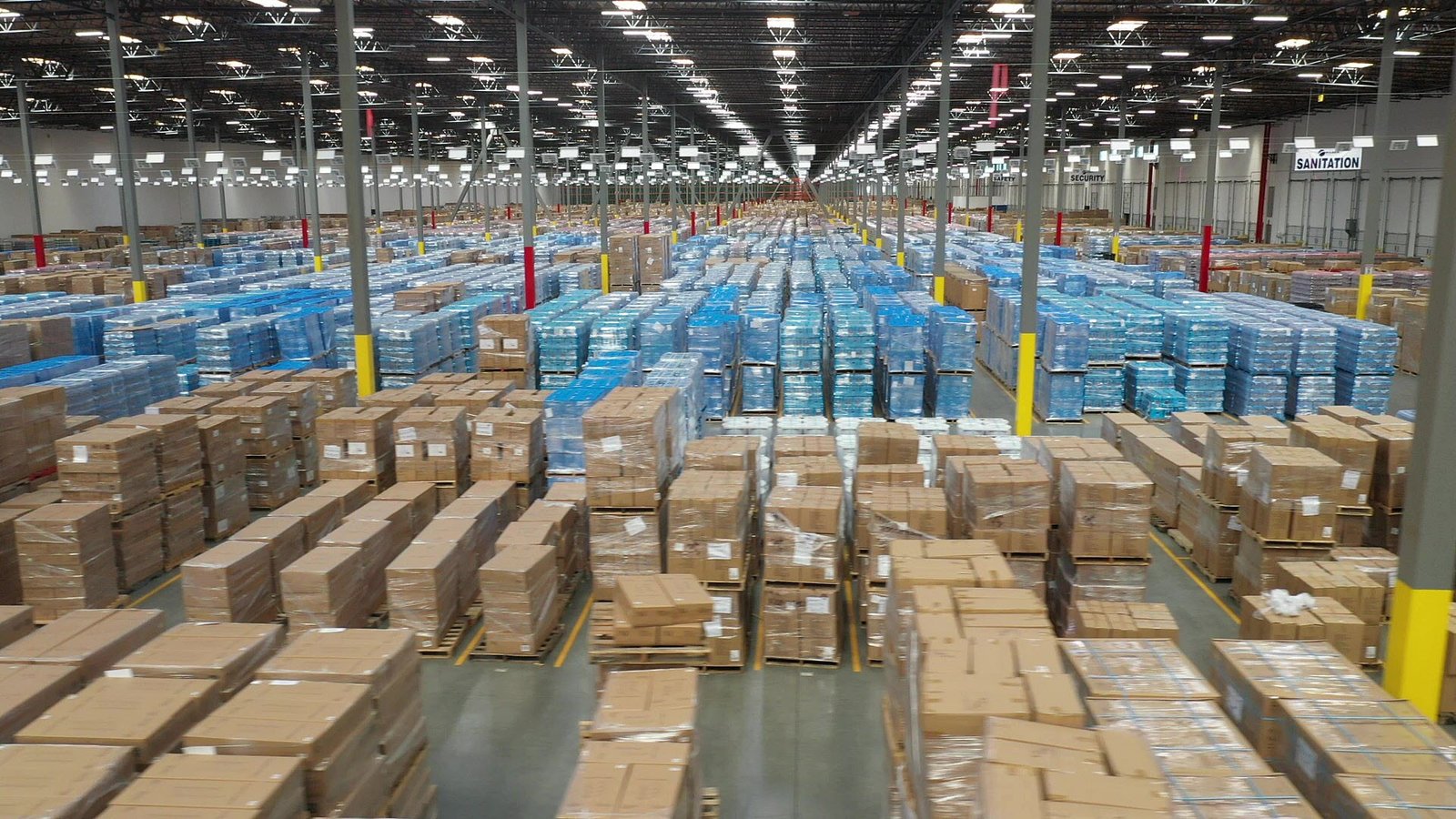
A distribution project is about one-third building and two-thirds site. The shell is usually a warehouse shell with a clear height set by the racking, a floor flat enough for narrow-aisle trucks and dock doors counted against the throughput. The site is the court where trucks turn, the apron where they back in, and the trailer parking that determines how many shifts the building can run. The pavement is where owners cut corners and then pay for it later.
We design truck courts with concrete in the apron and reinforced pavement where trailers sit, because a loaded trailer's landing gear punches through asphalt in a summer afternoon. Our work on truck courts and trailer yards includes the stormwater, lighting and gate geometry that most plans leave to the last drawing.
The corridor from Walsenburg to La Junta
We build along I-25 from Walsenburg north through Pueblo and east along US 50 toward La Junta. Within Pueblo the principal industrial grounds are the St. Charles Industrial Park, which has rail freight access, the airport industrial park east of town, and the loop of State Highway 47 on the north side. The State Highway 47 corridor gives six-lane access to I-25 at exit 101 and runs toward the airport via US 50.
Farther south, Trinidad is a junction of three BNSF subdivisions and sits on I-25, which makes it a natural point for cross-dock or transload. The Colorado Pacific Rio Grande Railroad interchanges at Walsenburg. We price each of these separately because rail access, utilities and soil are different from one town to the next.
A realistic schedule for a distribution building
The earthwork and slab take the most field time, and the steel or tilt-wall panels follow quickly. Most owners want the building to open ahead of peak season, and the work back from that date is blunt: design, permit, mobilize, grade, pour, erect, dock equipment, racking, fire protection and a final inspection. The city reports that commercial approvals take about 75 days, which is longer than many owners plan for.
We front-load work to shorten that. Site and foundation permits go in first, long-lead items like dock levelers, overhead doors and fire pumps are ordered before the shell permit is issued, and the racking contractor is brought in at the design stage so the slab flatness and column spacing match the system. If you want a fast route, our design-build delivery puts the architect, engineer and builder on one contract.
Planning the truck, not just the building
A warehouse that cannot move trucks fails regardless of its quality. We start by drawing the swept path of the longest trailer the building will see, then lay out gates, scale, parking and docks so trucks never queue onto the public road. In the Pueblo area, the problem is often the last quarter mile: a county road with a narrow pavement section or a rail crossing close to the entrance. We check that on day one and price the off-site fix.
Rail owners get the same treatment. When a spur is part of the plan, we lay it out with the railroad's standards and the building's dock pattern together. Our rail spur site improvements cover grading, ballast, drainage and crossings, coordinated with the carrier.
Who uses these buildings
Regional distribution in this part of Colorado serves grocery and food wholesalers, parts and industrial suppliers, building materials and the growing e-commerce side. Cold chain buildings pull refrigerated product through the same corridors, and we cover that in our cold storage work. Parcel and online retail operations look for different building shapes, discussed in the e-commerce fulfillment page.
Each sector wants something different from the shell: clear height, dock-to-floor ratio, office space, trailer count. We do not push one template. We start with what moves through the door and size the building.
Working next to traffic and moving trailers
Building a distribution center next to an operating highway or a live rail line requires control. We keep construction traffic off the public lanes, stage deliveries to avoid blocking the entrance and separate pedestrians from equipment. When working near a railroad, we follow the carrier's requirements for flagging, clearance and track protection, and we will not enter the right of way without the carrier's sign-off.
During operations, fire protection is the compliance item that governs the building. High-piled storage and racking heights drive sprinkler design, and the fire marshal reviews it. We coordinate the sprinkler contractor's design and the fire pump with the water supply early so the lines and tanks are on the site plan from the beginning.
Give us the trucks and the product
Tell us the trailer count, dock count and clear height you need. We will draw the court, price the site and shell and show where the schedule has to move.
Questions and Answers
Is Pueblo a good place for a regional distribution center?
It is a good place for owners who serve southern Colorado and the I-25 and US 50 corridors, because the city has the interstate, a second US highway and two railroads. It is not a place to serve a large metropolitan population, so size the building to the region you are serving. We help with the site decision by pricing sites against your truck and rail needs.
How much land does a distribution building need?
Land often runs to a multiple of the building footprint when trailer parking is heavy, and the real number depends on dock count and queuing. We draw the swept paths and parking layout before suggesting a minimum, and we show you the cost of paving and drainage for each option.
Can you build a rail spur to a warehouse?
Yes, with the carrier's agreement. Spur design depends on the railroad's standards for curves, switches and clearances. We handle the earthwork, drainage, ballast and crossings, while the track materials and switches are installed per the carrier. Plan on a long approval cycle with the railroad.
What is the fastest way to get a distribution building open?
Use design-build, start site and foundation permits first, and order the long-lead items early. Pre-engineered metal buildings and tilt-wall panels can also be fast depending on size. The permit time in Pueblo is about 75 days for commercial approvals, so start the application as soon as the site plan is firm.
How do you protect the pavement from heavy trucks?
We use concrete aprons at the docks, reinforced paving where trailers park and a properly compacted base under all of it. Asphalt alone does not hold up under landing gear loads in summer heat. The extra cost for concrete pays back in lower maintenance.
Related
Ready to talk about your project?
Tell us about the site, the heaviest loads and the date that matters. We will review the scope and follow up with next steps for your Pueblo project.