
Service Areas
Industrial Construction in Trinidad, Colorado
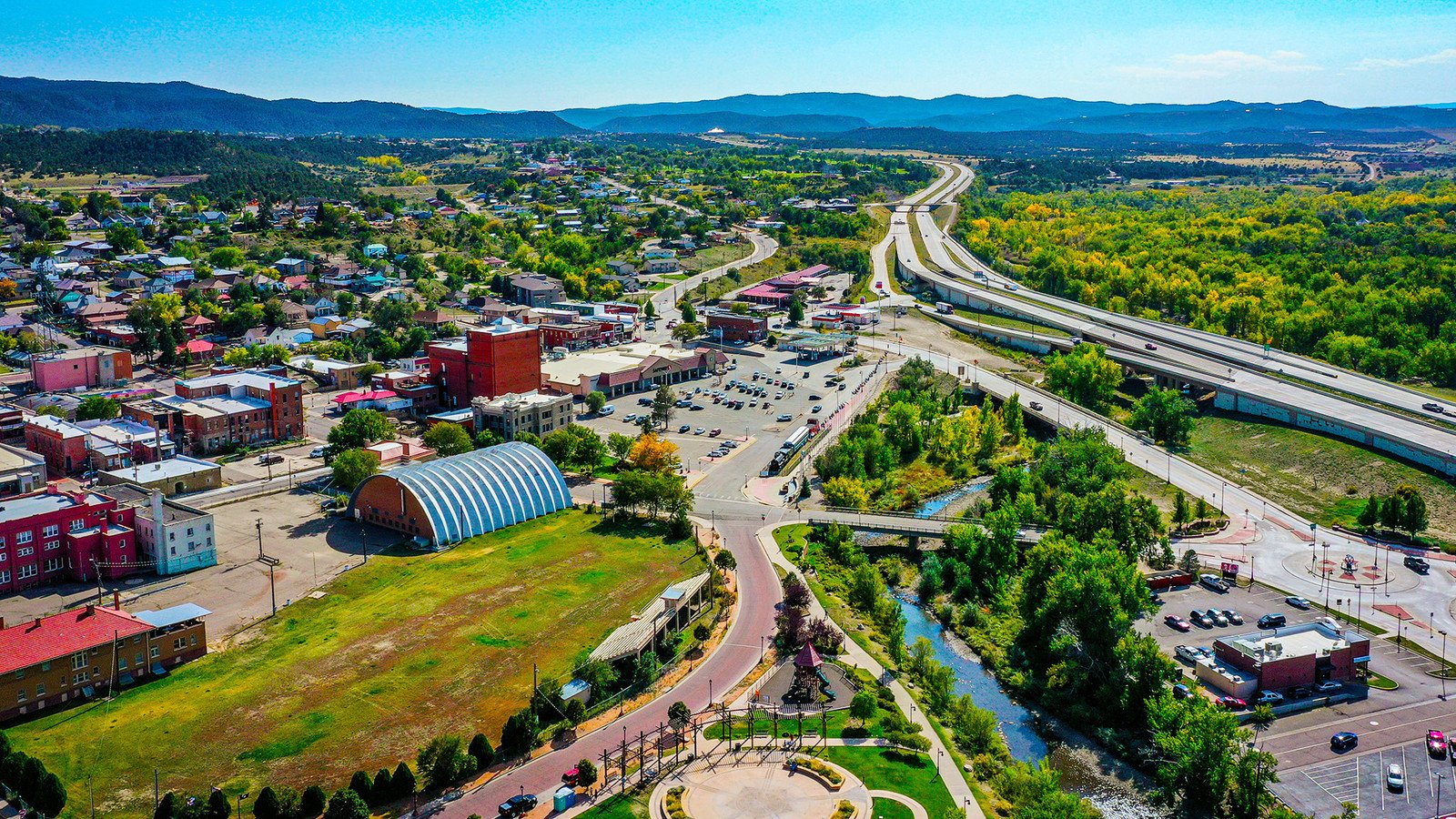
Anything we build in Trinidad lives with the climb to Raton Pass. Freight that comes through the Las Animas County seat has either just come down off that grade or is about to go up it, and owners who depend on that traffic need yards, docks and shops that can handle a bad-weather day without falling behind. We build truck terminals, transload and storage yards, maintenance shops and light industrial buildings in and around Trinidad, with crews that understand a mountain-front site.
Interstate 25 bisects Trinidad and US 160 also serves it. The town sits at about 6,025 to 6,030 feet, and Raton Pass, south of the city at the state line, reaches 7,834 feet. The pass carries both the interstate and the BNSF tracks, and the rail route there has grades up to 3.5 percent. That rail geography is the reason Trinidad is a railroad town, and it decides where a shipper wants to locate.
The city is a junction of BNSF's Raton, Twin Peaks and Spanish Peaks subdivisions, and Amtrak's Southwest Chief serves Trinidad Station. Rail-adjacent industrial sites here are not a matter of drawing a siding on a plat. The track owner has to agree, and so do the neighbors.
Slopes, drainage and mountain weather
A Trinidad lot is rarely flat. Cuts and fills change the budget before the foundation does, and runoff from the slopes above needs somewhere to go. We design stormwater detention and drainage at the start of site layout, and we keep silt fence and temporary swales working throughout construction, since a summer thunderstorm can undo a week of grading.
Winter changes the plan again. At this elevation snow and ice can shut a work day, and a concrete pour needs a heated enclosure or a postponement. We schedule exterior slabs for the warm months when we can, move interior work into the cold stretch and tell the owner honestly when a pour is weather-dependent.
Moving steel and concrete up the pass
Deliveries to Trinidad arrive over I-25 from the north, and the road south into the pass is steep and subject to weather closures. We order materials with that in mind, stage steel and rebar in advance and keep a buffer of ready-mix capacity by using a plant close to the site. A schedule built around one supplier is a schedule at the mercy of one road.
Crane time is the other bottleneck. We reserve cranes early and keep lifts to calm weather, and if wind rises we hold the pick. Owners get a written plan for every lift over a set weight, along with the swing radius and the ground bearing needed under the crane pad.
Concrete suppliers are fewer here than on the Front Range, so we call the batch plant before we commit to a pour date, confirm truck counts and agree on a backup. For a large slab or a long apron, that call is the difference between a continuous placement and a cold joint. Where the building is a pre-engineered metal building, the erection crew's calendar is booked just as early.
Rail, highway and a college town
Trinidad is the county seat, with 8,329 residents at the 2020 census, and it is home to Trinidad State College. For the industrial builder that mix means steady small-scale work: vocational lab space, shops, warehouses that support local suppliers and equipment storage for the trades.
The bigger prize is the freight corridor. A shipper with a transload need, a trucker that wants a terminal at the foot of the pass or a maintenance operator that needs a shop near the interchange all find Trinidad attractive. We work with them on truck terminals and cross-docks and on yards sized for the trailers they actually run.
Owners who also have a presence in the Pueblo valley sometimes want matching construction on both ends of the corridor. We build the same details here that we use on the Pueblo Boulevard corridor, so a maintenance crew does not have to relearn the buildings.
What we pour, grade and erect
On a Trinidad job we manage the earthwork, concrete and steel erection as one schedule. That control matters in a place where a delay costs a week, since the schedule can pivot to interior work when exterior work is blocked. Paving and truck courts and trailer yards get the same attention to base thickness and drainage.
When the project needs rail-adjacent site work, we handle grading, crossing approaches and drainage, and coordinate crossings and track-side work with the railroad's requirements. We do not touch the owner's track; we build everything around it.
Who builds here and why
The customers who call us from Trinidad tend to be in logistics and distribution, in repair and fleet service, or in a trade that supplies the region. A few are in utilities and power, where yards and equipment buildings have to survive weather.
What they share is a need to stay operational. A terminal that closes for a week of mud loses money, so we treat the base course and drainage under the yard as the most important part of the job. Pretty is optional. Dry and flat is required.
Have a Trinidad site in mind?
Give us the address, the equipment you run and the date you need to be open. We will look at drainage, access and the rail question before we quote a price. Compare Trinidad with the stretch north at Walsenburg if you want a second option on I-25.
Questions and Answers
Will weather on Raton Pass delay my project?
It can delay deliveries, though the site itself is in town. We plan material orders ahead of winter, stage steel and rebar before storms and avoid pouring on days when roads or temperatures are bad. A weather clause in the schedule keeps expectations honest.
Can you build next to the BNSF tracks in Trinidad?
Yes, but the railroad has the last word on what is allowed near its right of way. We submit the site plan for review, build clear of the clearance envelope and plan any work near the tracks around its approved windows. We also price flagging and inspection time into the proposal.
What does a truck terminal in Trinidad need that a flat-land terminal does not?
Drainage, grade control and a stronger base. Sloping ground sheds water quickly, which can erode edges and wash out aggregate. We design inlets, swales and detention to handle storms and slope the yard so trailers can be parked without rolling. Concrete aprons at docks also need thicker sections where trailers drop their landing gear.
Do you build maintenance shops for fleets that run the I-25 corridor?
Yes. A shop for tractors and trailers needs a thick slab with embedded drains, a reinforced apron at the doors, clear spans or crane rails if heavy lifts are planned and a yard that drains away from the bays. We coordinate the lube, air and exhaust systems with the mechanical trades, then pour the slab to the equipment layout instead of guessing.
How far is Trinidad from Walsenburg and Pueblo for crew and material supply?
Walsenburg is 36 miles north on I-25 and Pueblo is farther up the same route. Crews and materials for larger projects come from the Pueblo valley, and we use local suppliers for smaller orders when they can meet the schedule. We tell you in the proposal where each material comes from.
Related
Ready to talk about your project?
Tell us about the site, the heaviest loads and the date that matters. We will review the scope and follow up with next steps for your Pueblo project.