
Building Types
Data Center and Mission-Critical Building Construction in Pueblo
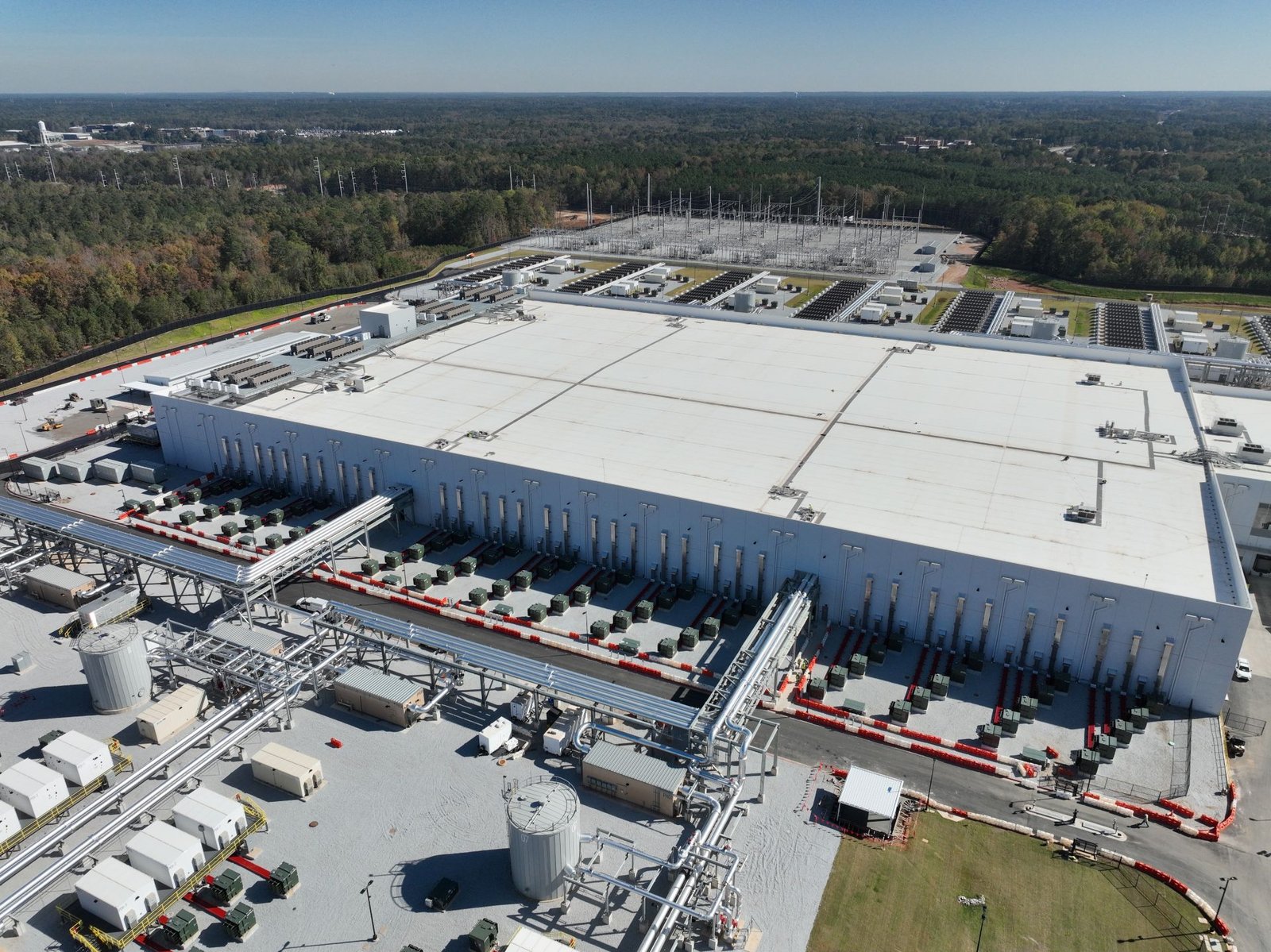
Power decides where a data center goes, and then land, fiber and water. Pueblo has an unusual power story for a mid-sized city: the new rail mill project includes a 240 megawatt on-site solar field, and the region has a long record of heavy industrial load. That is the kind of electrical background that data center developers ask about before they ask about square footage.
We build the building and the site around that load. A data center is a heavy-industrial building in a clean-room costume: slabs that carry racks and generators, structure that holds cooling plant on the roof or beside the building, duct banks that carry medium voltage, and a fuel and water plan that works through a bad week. The finishes are simple. The utilities are not.
We have no interest in selling you a data center you do not need. If your load is a few hundred kilowatts and a small server room inside an existing plant, we will say so and build that. If you are planning a multi-megawatt campus, we will walk the sites with your engineer and tell you what each one costs to energize.
Land, Power and Space in the Pueblo Area
PuebloPlex is repurposing a large former depot site for manufacturing, technology, logistics, rail-related industry, aerospace and defense, and research and development. HR Green's master plan work there covers a site of roughly 16,000 acres with more than 600 buildings plus utility and transportation systems. That is a rare combination of acreage, existing buildings and utility corridors in the Pueblo area, and a technology user could use any part of it.
Closer in, Pueblo Memorial Airport covers 3,872 acres six miles east of the city, and the city lists 40 acres available for development with direct taxiway access, next to US 50 and five miles from I-25. Our pages on PuebloPlex and the airport industrial park describe what we can build in each place.
Codes and Reviews for Mission-Critical Buildings
The Pueblo Regional Building Department lists the 2021 International Building, Mechanical, Fuel Gas and Fire Codes with the 2023 National Electrical Code as in effect. The county building division enforces the 2021 ICC codes and the 2023 NEC with its own amendments. Generators, fuel storage, gas suppression and large battery systems add fire and environmental reviews on top of the building permit.
The state energy code rule matters here too. Colorado House Bill 22-1362 requires local governments updating their code on or after July 1, 2023 to adopt an energy code at least as strong as the 2021 IECC and the state electric and solar ready code, and from July 1, 2026 the benchmark becomes the state low energy and carbon code. For a data center, cooling efficiency and electric readiness draw review attention. We run the building, fire and utility reviews side by side so none of them waits on the others.
Utility Interconnect and Redundancy
The longest item in a data center schedule is the utility interconnect. Substation capacity, transmission upgrades and transformer lead times can run past the date the building is done. We open the utility conversation at site selection, not after groundbreaking, and we obtain written capacity and delivery dates before the owner commits to a site.
Inside the fence, redundancy drives everything. Two power paths mean two duct banks, which means trenching, concrete encasement and separation distances. Cooling plant, generators and fuel tanks need slabs, containment and fire access. Our underground electrical duct bank work and the utilities and power side of our business are why we are comfortable on these jobs.
Schedule: Equipment Lead Times Lead
Switchgear, generators, transformers and chillers can have lead times longer than the building itself. A realistic schedule starts with the equipment orders, then works backward to pads, structure and enclosure. We place early procurement packages for the longest items as soon as the design is stable, and we track them weekly. Our long-lead procurement management is built for this.
Commissioning is a project phase of its own. Load banks, integrated systems testing and documentation can take weeks, and the owner's operator often needs access to the building to train. We schedule commissioning from the start and keep other trades out of the rooms under test.
Build Clean, Build Once
Dust is the enemy of a data hall. We seal the roof early, pour and finish the slab before racks arrive, and manage the interior as a controlled environment with clean entrances and floor protection. We separate the dirty work, such as trenching and paving, from the finished halls in both space and time.
We also coordinate tightly with the owner's operations team. Racks, cabling and security systems arrive in a planned order, and the building has to be ready to receive them. For smaller loads we build data center support buildings: generator yards, electrical rooms and operations spaces next to an existing plant. For a new building from the ground up, data center construction is the service.
What Drives the Number
Power and cooling plant dominate, and the structure is usually the smaller share. Redundancy level, rack density and cooling type all move cost sharply. A server hall inside an existing manufacturing plant costs a fraction of a stand-alone campus, and a small shell fits in flex industrial space. Site work can be a surprise: a campus on rolling ground needs more grading and drainage than a flat site, and long utility runs add trenching and boring costs.
The local cost environment helps. The city lists commercial and industrial construction about 10 to 15 percent below the national average. That does not make the electrical gear cheaper, but it does help with labor, concrete and site work. We build a cost model with the owner's engineer so the budget is tested against each site before you commit.
Bring the Load and the Site List
Send us the megawatts, the tier of redundancy and the parcels you are considering. We will give you a plain read on each site's utility path and construction cost.
Questions and Answers
Is Pueblo a practical place for a data center?
It can be, depending on the utility path. The region has heavy industrial load, large parcels at the airport and at PuebloPlex, and a large solar field planned at the rail mill. The decision comes down to what capacity the utility can deliver and by when, and we help you test each site against.
How long does a data center take to build?
The building is often the quickest part. The long poles are utility interconnect, switchgear, generators and cooling plant. We plan from equipment delivery backward, and we price early procurement so the orders are placed before final pricing.
Can you build a small data room inside an existing plant?
Yes. We build clean rooms, electrical rooms and support buildings inside and beside operating facilities. We design for access, fire separation, cooling and power backup, and we phase the work to avoid disturbing production.
What fire protection does a data hall need?
It depends on the owner's risk profile, the insurer and the authority having jurisdiction. Options include pre-action sprinklers, clean agent systems and very early smoke detection. We bring the fire official into the design early so the system is accepted at inspection.
Related
Ready to talk about your project?
Tell us about the site, the heaviest loads and the date that matters. We will review the scope and follow up with next steps for your Pueblo project.