
Industrial Construction Services
Electrical Duct Banks and Underground Power, Pueblo
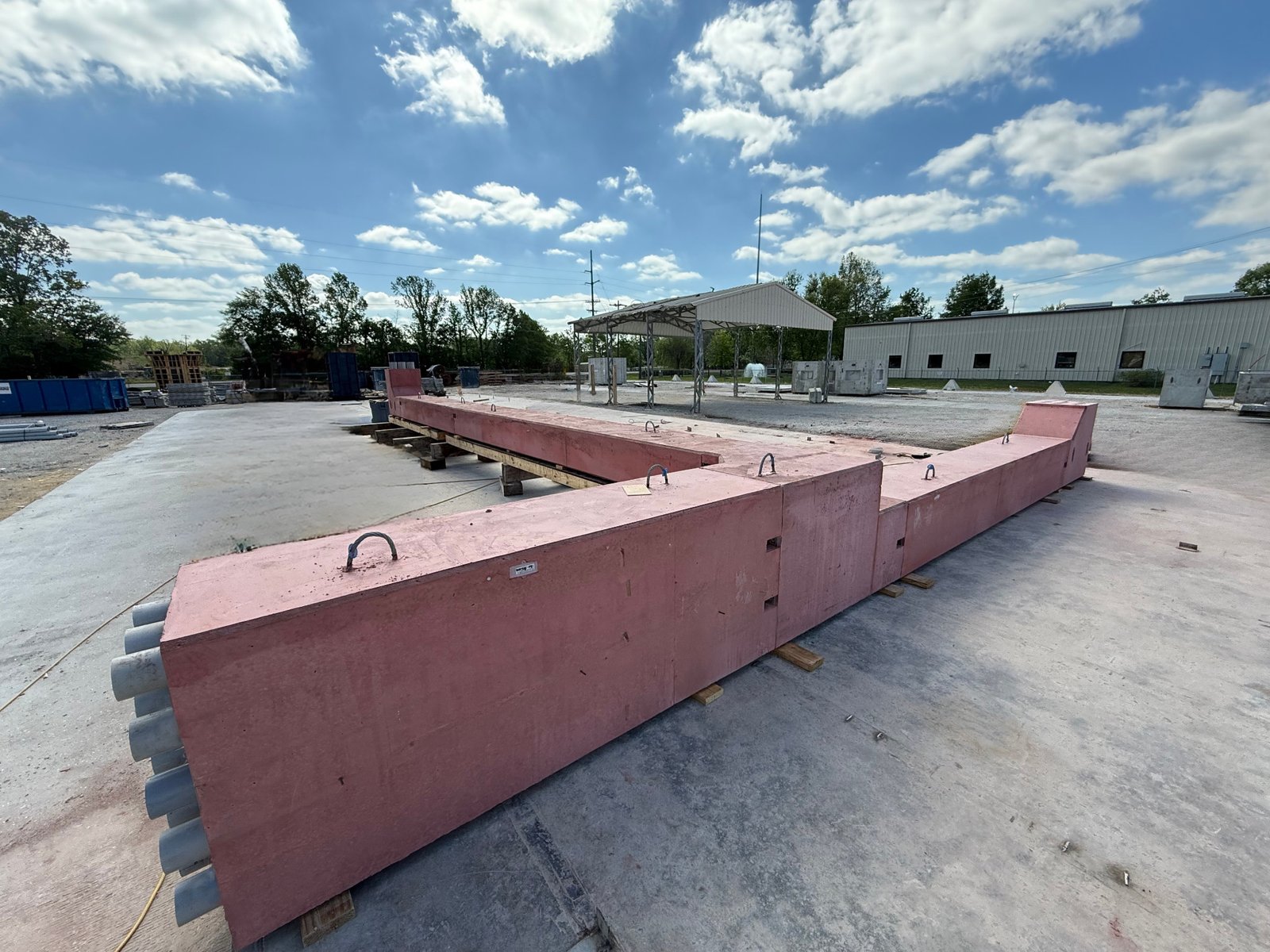
Industrial power in Pueblo can mean very large numbers, as a 240 megawatt solar field on the steel works site shows. Most plants will never see that scale, but every one of them has the same underground problem: getting heavy feeders from the utility to the switchgear, and from the switchgear to the equipment, through a yard full of trucks, rail crossings and other utilities.
A duct bank is the answer. It is a group of conduits set in a trench at controlled spacing and depth, usually encased in concrete, with manholes or pull boxes at intervals so cable can be pulled in later. Done right, it protects the cable from loads, moisture and digging for decades, and it leaves room to add circuits without cutting the pavement.
We build duct banks and the underground structures that go with them: transformer pads, manholes, handholes, light pole bases and the stub-ups into buildings and equipment. The electrician pulls the cable, and we make sure there is something sound to pull it through.
Why the underground matters more on heavy sites
Heavy-industry sites ask more of the ground. Forklifts, tractor-trailers and cranes pass over the same routes day after day, and a shallow conduit under a truck lane is a repair bill waiting to happen. The wind tower plant area in Pueblo, where a manufacturer broke ground on a 900,000 square foot expansion aiming at about 10,000 tower sections a year, shows the kind of load that a plant can place on its yard. The same logic applies at the steel mill area and anywhere large components move on trailers.
Power demand also tends to grow. A plant that starts with one line often adds another, and the cheapest time to buy conduit is during the first excavation. We recommend spare ways, sized for the future, and we cap and mark them so they can be found.
What goes into the trench
We excavate to the design depth, install a compacted bedding, set spacers to hold the conduit at the required separation, tie reinforcing steel where the design calls for it and place concrete in a controlled pour, often with red dye so later excavators know what they are digging near. Conduit is PVC or rigid steel as specified, with sweeps and transitions at the ends.
Manholes and pull boxes are cast in place or precast and set to line and grade. We install grounding conductors, pull lines and mandrel and test each conduit before closing the trench. The completed bank connects to the site utilities package as one coordinated underground network.
Locate, coordinate, then dig
Before any excavation, we locate existing utilities with the one-call service, supplement that with private locating and potholing, and mark our routes on the surface. A duct bank that hits an old gas line is expensive for everyone, and the work is stopped until it is sorted out.
We coordinate routes with the electrical engineer, the utility and the other trades so that duct banks do not collide with storm pipes, fire mains or foundations. The same crews that place the duct bank also form the equipment pads and foundations it connects to, so stub-up locations match the equipment as delivered.
Code and utility requirements
Pueblo and Pueblo County enforce the 2023 National Electrical Code, which sets burial depths, separation, grounding and conduit fill requirements for underground work. Utility companies add their own standards for primary and secondary conduit, transformer pad dimensions and clearances, and those usually control within the utility side of the meter.
Electrical editions are set at the state level and change on their own schedule. A county in western Colorado, for instance, notes that the 2026 National Electrical Code takes effect January 1, 2027 even as its building code remains the 2024 International Building Code. We confirm the edition at permit time and design to it, so a late change does not force a redo.
Decisions that save money later
Choose the route first. A straight run with few turns is cheaper to build and easier to pull. Avoid crossing truck turning areas where you can, and place pull boxes where they can be reached without closing a lane. Coordinate light pole locations in advance so that yard lighting and electrical site work ties into the same trench system.
Decide how many ways you need and how much you might add. Add spares for communications, controls and future feeders, and keep power and low voltage in separate banks. Document everything with survey points, because you may have to find that conduit twenty years from now. For a tilt-wall building where the slab is poured late, set the stub-ups before the floor so nobody has to core through a new slab.
What moves the price
Length, depth, concrete volume and trench conditions drive the cost. Rock, groundwater or conflicts with other utilities can add significantly. Owners in utilities and power and other power-hungry trades often have long runs, and for them the duct bank is a large share of the site package.
We price duct banks by the foot with the conduit count, concrete and manholes called out. Savings can come from consolidating routes or shortening runs by placing switchgear nearer the load, but we weigh that against the cost of long cable runs inside the building.
Give us the single line
Send the one-line diagram and the site plan. We will lay out the duct routes, count the pull boxes and show you what the underground costs before the switchgear is ordered.
Questions and Answers
Do we need concrete encasement on every duct bank?
Not always. The code and the engineer determine when direct burial or encasement is acceptable, and the utility may require encasement for its own conduits. Concrete adds protection under traffic and at crossings. We price both options and let the engineer decide which fits the load and the risk.
How deep do the conduits go?
Depth depends on the voltage, the location and whether the run crosses a drive lane. The code sets minimums, and the engineer may require more for frost protection or heavy loads. We follow the design and mark the actual depth in our survey.
Can you add conduits later to an existing bank?
Rarely cheaply. Once a bank is encased and covered, adding conduits means a new trench. That is why we suggest spare ways at the start. If a plant has outgrown its bank, we can trench alongside, plan crossings carefully and tie into existing boxes.
Who pulls the cable?
The electrical contractor does. We install the conduit, prove each run with a mandrel and leave a pull string, then hand off the route in a clean condition. Good coordination between the duct bank crew and the electrician avoids rework.
What happens if we hit an unknown utility?
We stop work in that area, call the owner of the line if it is known, and bring the engineer. Old plants often contain abandoned lines with unknown contents, so we treat each unknown as live until proven otherwise. Our locating and potholing before digging reduce but do not eliminate the risk.
Related
Ready to talk about your project?
Tell us about the site, the heaviest loads and the date that matters. We will review the scope and follow up with next steps for your Pueblo project.