Service Areas
Industrial Construction in the Minnequa Steel Mill Area, Pueblo
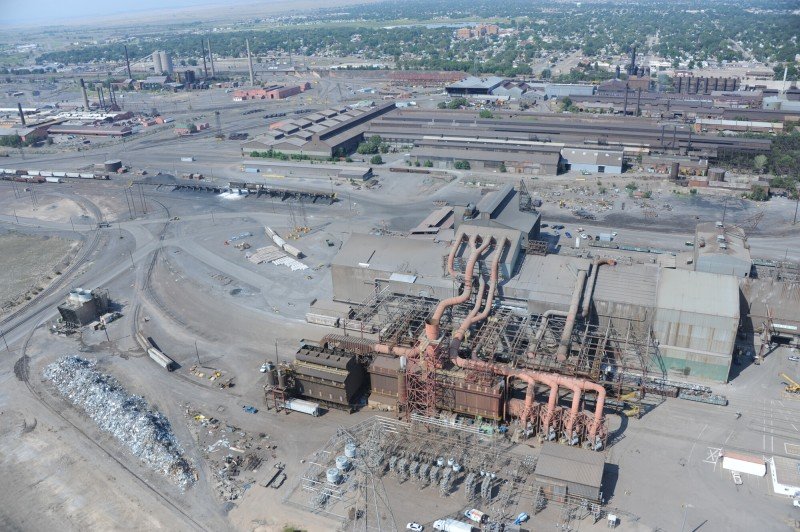
Work beside a running steel mill follows rules that an ordinary job site never sees: hot metal, moving rail cars, overhead cranes, crane-way clearances and production that does not stop for a contractor's schedule. We build in the Minnequa and South Side mill district for plant owners and for the suppliers around them, and we do it with crews that already think in terms of lockout, hot work permits and shutdown windows.
The steel mill on Pueblo's south side, on the Arkansas River, first produced on April 12, 1881, was renamed the Minnequa Works in 1901 and became Rocky Mountain Steel Mills in 1993. It changed hands in January 2007 for $2.3 billion. Its electric-furnace steel, rail, rod, bar and seamless tube mills remain in operation, and the mill is listed with 931 employees as Pueblo's eighth largest employer in the city's 2023 annual financial report.
A district built around an operation that old is full of buried history. Old foundations, abandoned pipe, slag fill and rail beds all show up in the ground. We assume they are there and plan the dig accordingly.
A new rail mill beside an old one
A solar-powered long-rail mill went into the ground at a reported $500 million, with about 800 construction jobs, about 300 permanent jobs, a 240 megawatt on-site solar field and $100 million in incentives through the Pueblo Economic Development Corporation. The mill can roll rails up to 480 feet long, up from an earlier 80 foot limit.
Those lengths drive the work around the mill: long runs of foundations, long conveyor and handling lines, and yards where 480 foot rails are stored and loaded. Suppliers who feed the mill, from scrap to refractory to fabrication, need buildings that serve that scale, and some of them set up out at the airport industrial park instead. We follow the work and plan for the labor and equipment it takes.
Not every supplier needs a new building. Some need a larger yard, a stronger floor under existing machines or a bay widened for a new part. We take small jobs in this district as seriously as large ones, since the people who run them are often the same people who will call for the next phase.
Rules inside the fence
Before any crew on our job steps into a plant, they get a safety orientation that covers the owner's rules, plus ours. Hot work permits, confined-space entry, lockout, crane-way clearances and rail traffic all have written procedures. Tools are counted, deliveries are escorted and work zones are barricaded.
We schedule noisy and dusty work to avoid sensitive operations and plan around the mill's maintenance outages. If a shutdown is the only time a tie-in can happen, we train the crew in advance and stage every part of the job so the outage is spent working, not hunting for materials.
What owners ask us to build
Typical scopes include equipment pads and foundations for new lines, renovations and modernization of existing buildings, crane-way upgrades, and new manufacturing plant additions. We also handle yard work, rail-side paving and drainage.
Some projects involve removal of obsolete structures. Our industrial demolition services cover slab removal, foundation breakout and debris hauling with the dust and noise controls a working plant requires.
Concrete and steel under one plan
Heavy industrial concrete is our focus. Mass pours for pits, equipment pedestals and thick slabs on grade need careful mix design, temperature control and sequencing. We schedule the forming and placing trade partners closely so the pour is not delayed by another job.
Structural steel erection is the other half. Crane lifts inside a live plant need engineered plans, ground bearing checks and watchers. We bring that planning discipline to every pick, so the crane work you see is the crane work that was on the plan.
What moves cost in a mill district
Access and schedule are the big drivers. A job inside a plant spends hours each day on permits, escorts and clearing the work zone, which a greenfield job does not. We price those hours rather than hide them.
Reports on the rail mill's cost disagree, with one article describing the project as $302 million against the $500 million figure above. We mention it because owners should expect the same kind of confusion on any large job, and should want a builder who writes scope and exclusions plainly. A contractor on that project ended employment of 666 contract workers on January 3, 2023 amid a dispute over delay and cost, with damages claimed above $130 million. We take it as a reminder that large jobs depend on clear schedules and honest reporting, and we hold ourselves.
Planning around outages and labor
When a major mill project is under way, it pulls on craft labor, cranes and concrete. We book trade partners, ready-mix and equipment early and tell owners which months look tight. If a plant's outage window is fixed, we work backward from it and tell you what has to be ordered by when.
Winter shapes the sequence. Exterior slabs and paving go in during warm months where possible, and interior work moves to the cold season. The schedule shows the weather risk where it exists.
Support work around the plant
Mill suppliers often need heavy-haul access roads built to carry oversize loads, plus rail spur site improvements and drainage. We build those with the same base thickness we use inside the fence.
For owners in metals and heavy industry, we can also take on yard lighting, fencing and utility work so the whole site is built under one schedule and one contact. The Pueblo Boulevard corridor just south is where many of the suppliers locate.
Building in the mill district?
Tell us what the plant needs, when the outage window is and what rules apply inside the fence. We will walk the site and return a schedule and scope you can hold us to.
Questions and Answers
Can you work inside an operating steel mill?
Yes, within the owner's rules. Every crew on our job takes the safety orientation, follow permits for hot work, confined space and lockout, and coordinate with plant operations on schedule. We plan the work around outages and keep the site equipment out of production routes.
Why does work around the rail mill affect small projects?
A large project pulls labor, crane time and ready-mix. That can lengthen lead times and raise prices for smaller jobs nearby. We book resources early, tell owners where the schedule is tight and suggest alternate dates when a window will not hold.
What do you do about old foundations and fill in the ground?
We assume they exist. We research the site history, probe the ground before design and carry an allowance for removal and replacement. If we find something unexpected, we stop, document it and talk to the owner before proceeding.
How do you keep production safe while you work nearby?
We separate our zone with barricades, route the construction trucks away from the mill's own traffic and post watchers where cranes swing over aisles. Daily meetings with the plant contact cover what is planned, what could affect production and who to call. Anything that might shut a line goes through the owner first.
Do you handle rail-side work?
We handle the civil side: grading, drainage, paving, and foundations near track. Work on the track itself belongs to the railroad or an approved track contractor. We coordinate so each piece fits.
Related
Ready to talk about your project?
Tell us about the site, the heaviest loads and the date that matters. We will review the scope and follow up with next steps for your Pueblo project.