Industrial Construction Services
Rail Spur Site Improvements for Pueblo Industrial Plants
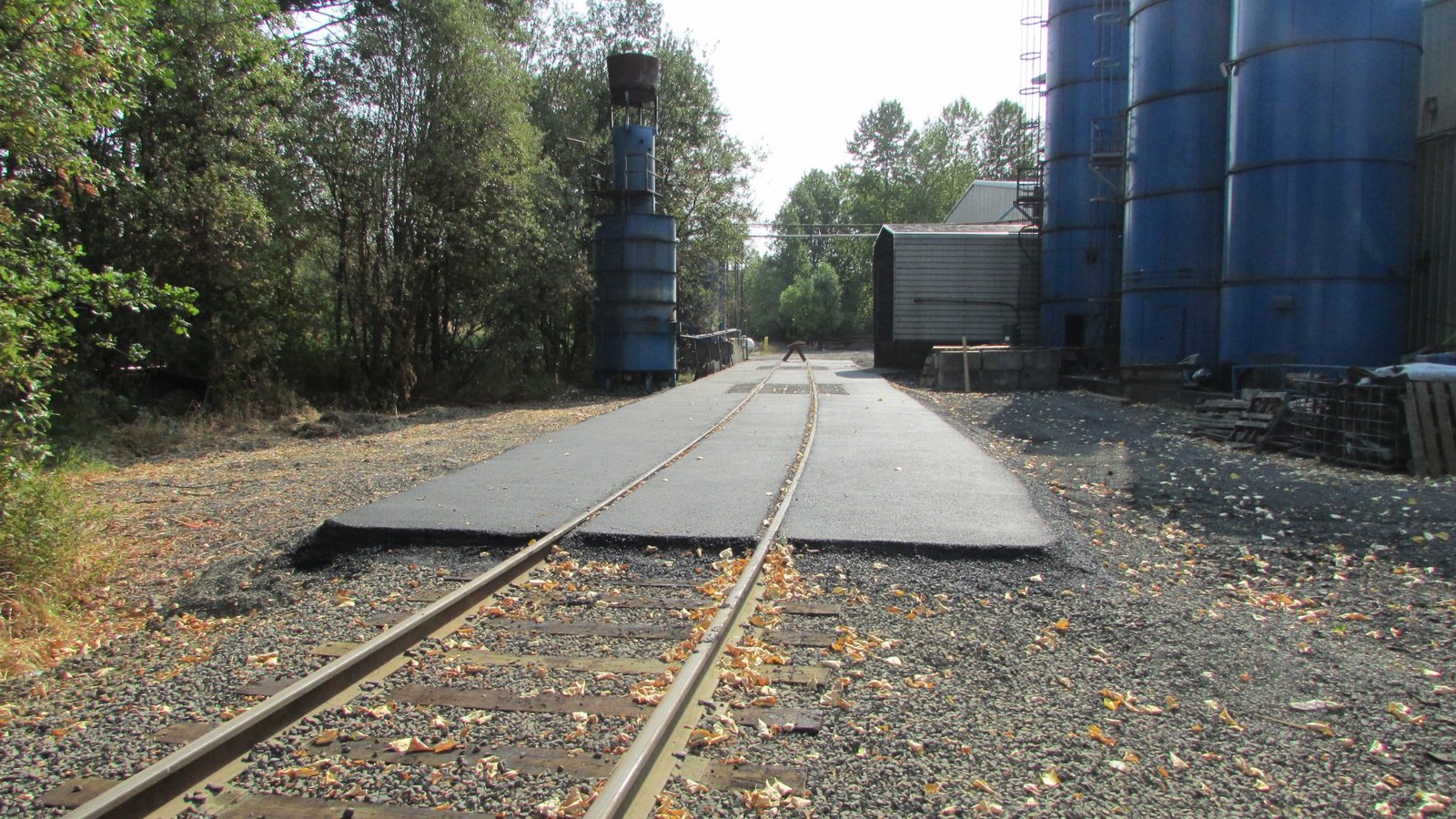
Rail does not forgive a bad grade. A spur that settles an inch under a loaded car, or a ditch that lets water into the ballast, becomes a derailment risk and a repeat repair bill. We handle the site improvements around industrial rail spurs in Pueblo and the Arkansas Valley: subgrade, drainage, crossings, loading pads and the yard civil work that lets a plant receive and ship by rail without trouble.
Pueblo is a rail town and the buildings show it. BNSF and Union Pacific both serve the city, the St. Charles Industrial Park is listed by the city as an Opportunity Zone with rail freight access, and the PuebloPlex lands are being filled by tenants that include rail car storage and maintenance. Northeast of the city, the Transportation Technology Center runs about 48 miles of track on a site described as 30,000 acres. Rail is not a side topic here.
We do the site work that surrounds the track. The track itself is built to the serving railroad's standards by a qualified track contractor, and we coordinate that work with the civil scope so one crew is not rebuilding what the other just finished.
Rail customers in the Pueblo metro
Many Pueblo industrial users depend on rail for bulk inbound material and finished product. The south-side mill can roll rails up to 480 feet long, up from an earlier 80 foot limit, and a product like that needs long, straight, well-supported yard track. The mill district has the oldest rail infrastructure in the metro, and a lot of it runs through tight, built-up ground.
Newer rail-served sites are opening on the former depot ground. PuebloPlex is being repurposed for manufacturing, logistics, aerospace and defense and rail-related industry, and its plan supports industrial, storage and rail uses. An owner looking at a parcel with track already in the ground still has to check the bed, the drainage and the crossings before committing to a plant layout.
What goes wrong with spurs and how we plan around it
Most spur problems start with water. Track structure needs to drain freely, and a plant yard that was graded for trucks often sheds water straight toward the ballast. We design the ditches, culverts and subdrains so water leaves the track bed and never pools on it. We also check where grades meet the track at crossings, because a truck crossing at a bad angle can damage both the rail and the load. Where a yard has to cross two or three tracks to reach a dock, we model the crossing grades with a low-slung trailer in mind and flatten the approach until it clears.
The second problem is clearance. Cars, locomotives and loads have minimum horizontal and vertical clearances to buildings, poles and signs. We set the building line, the pole locations and the fence lines against the clearance diagram before the first stake goes in, not after the steel arrives. Our heavy-haul access roads are drawn with the same clearance sheet.
What we manage around the track
We manage the earthwork, subgrade preparation, drainage, utility sleeves, concrete aprons and slab work that surround the track. That includes stripping unsuitable soil, building up an engineered subbase, installing culverts and ditch linings, and placing crossing and loading pad concrete. We bring in the track contractor for rail, ties, switches and ballast, and we hold the interface meetings so the sequence is clear.
Spur work also means working around active track. We agree flagging, car spotting times and track outages with the railroad and your yard crew before the first machine moves. We also manage the concrete work for tank car and hopper unloading areas: containment curbs, sumps, pump pads and slab-on-grade built to the chemistry of what you unload. For the larger equipment pads, the work continues into equipment pads and foundations, so the railcar dumper or loading arm sits on a foundation we also built.
The scope, from subgrade to commissioning
A typical rail site improvement job begins with survey and geotechnical work, followed by clearing, grading and subgrade stabilization. We build the subballast layer, the drainage system and any retaining walls or embankment, then hand the corridor to the track contractor. After track is in, we return for crossings, aprons, loading platforms, lighting and fencing.
We also help owners with long lead items. Switches, special track work and rail itself can take months to arrive, so we flag them during preconstruction and work with the owner's long-lead procurement plan. The goal is to have the site ready when the material lands, not months before or after.
Where a spur earns its keep
Spurs serve more than steel. Bulk material warehouses, transload facilities and manufacturing plants all use them, and the grade, drainage and clearance rules are the same. A rail-served warehouse with a spur side needs a dock apron and a crossing that trucks and forklifts can use without a rail hazard.
Operators in logistics and distribution and metals and heavy industry are our most common spur customers. If your site is out east near La Junta, where BNSF runs freight and Amtrak's Southwest Chief provides daily passenger service, we can mobilize there as well, and we price the travel honestly.
Tell us where the track meets the plant.
Send the site plan, the serving railroad and the cars you expect to handle. We will walk the corridor, check the drainage and clearances, and give you a plan and a price.
Questions and Answers
Do you build the track itself?
No. Track construction is done by a qualified track contractor to the standards of the serving railroad. We prepare the subgrade, drainage, crossings and surrounding concrete, then coordinate with the track crew so the work fits together. Many owners prefer that split because it keeps a specialist responsible for the rail.
Who approves a new spur connection?
The serving railroad reviews and approves the connection, and it has its own design standards and agreement requirements. We prepare the civil drawings and help the owner submit them. Plan for the railroad's review time in the schedule, since it is outside our control and can be long.
How do you deal with rail crossings inside the plant?
We design crossing surfaces for the loads that cross, typically with concrete panels or reinforced pavement, and we grade the approach so trucks do not bottom out. Drainage is critical at crossings because water trapped in the flangeway damages both the surface and the track.
Can an old spur be brought back into service?
Sometimes. We inspect the bed, check the drainage and survey the geometry, then your track contractor assesses the rail and ties. Old spurs often need new subgrade and drainage even when the rail is serviceable. We give you a punch list with costs before you commit.
What clearances matter most when siting a new building by a spur?
Horizontal distance from the track centerline to the building face, vertical clearance over the track, and the setback of poles, fences and signs. The serving railroad publishes those numbers, and they change with track type and speed. We check them against your building line during preconstruction.
Related
Ready to talk about your project?
Tell us about the site, the heaviest loads and the date that matters. We will review the scope and follow up with next steps for your Pueblo project.