
Industrial Construction Services
Heavy-Haul Access Roads for Pueblo Industrial Sites
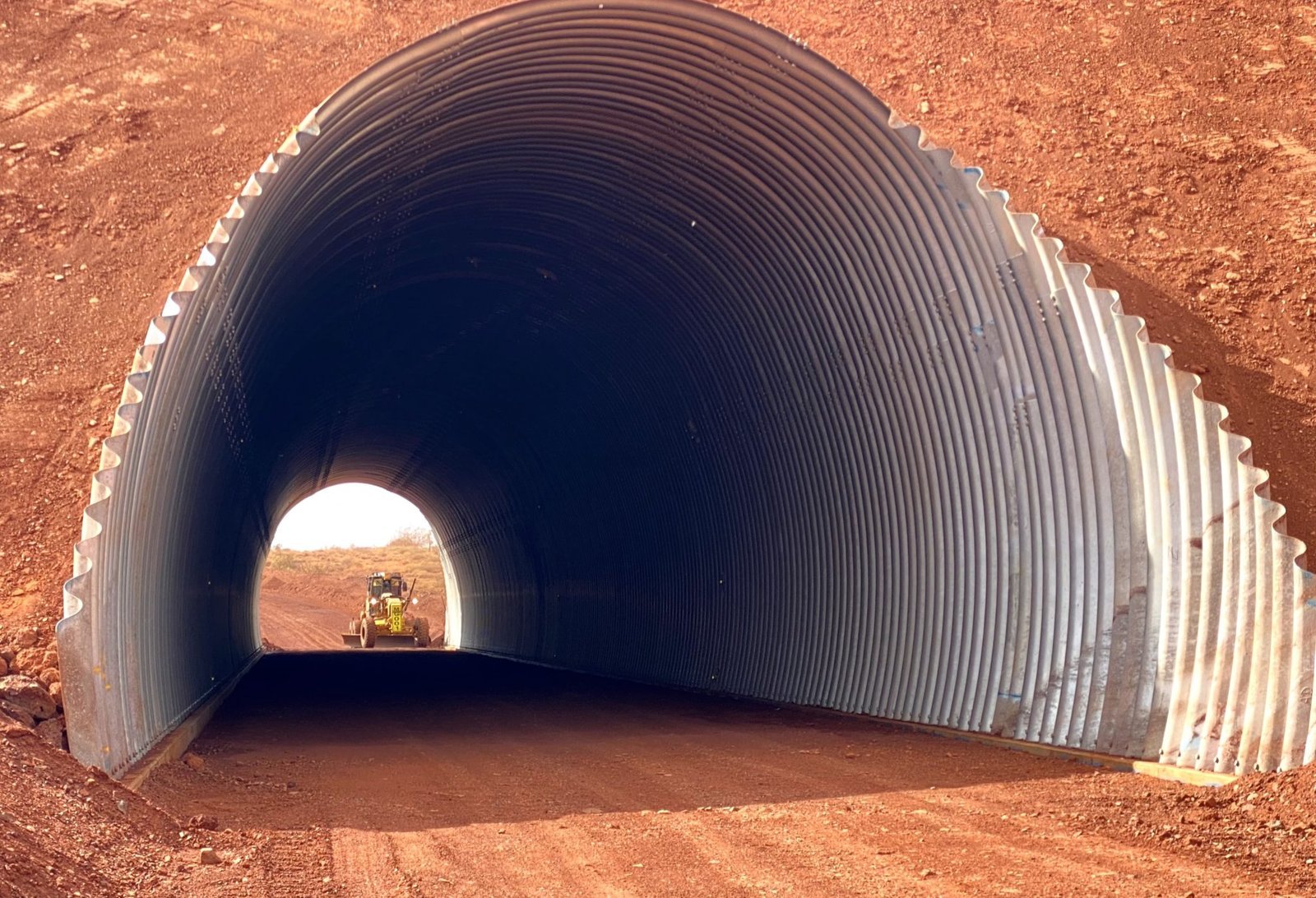
Tower sections do not take a corner the way a pickup does. A rolled steel shell, a transformer on a multi-axle trailer or a stack of mill-length rail rides a long wheelbase, swings wide at the turn, and puts more weight on a few feet of pavement than most commercial roads were ever built to carry. We build heavy-haul access roads in Pueblo and the Arkansas Valley so those loads reach the plant gate without breaking the road or the schedule.
Pueblo is a natural place for this work. Interstate 25 and US 85 share one route through the city, US 50 crosses it east and west, and BNSF and Union Pacific both serve the freight side. The wind tower plant is working toward about 10,000 tower sections a year, and every one of those leaves the yard on a trailer. The long-rail mill on the south side can roll rails up to 480 feet long, which tells you what kind of loads and what kind of turning room a road to a mill has to allow for.
A heavy-haul road is not just thick asphalt. It is a design for a specific truck, a specific turn and a specific drainage pattern. We start with the truck and work back to the road.
Start with the truck, not the pavement
We ask for the vehicle configuration before we draw anything: axle count, axle weight, trailer length, overhang and the widest load. From that we set turning radii, lane widths, shoulder widths and the thickness of the pavement section. A road for a six-axle trailer needs a different section from one for ten-wheeled dump trucks, even though both are called heavy.
Then we check the soil. Weak clay, a high water table or old fill can make the best-designed pavement fail within a season. We test, excavate and replace what has to go, and we prove the finished subgrade with a loaded truck. Our stabilized laydown yards use the same proof-roll method.
Permits, driveways and highway connections
Most heavy-haul roads connect to a public highway, and that connection is where the permit work lives. State Highway 47 runs as a six-lane divided road east from the I-25 exit 101 interchange to a diamond interchange with US 50 and SH 96, which also gives access to Pueblo Memorial Airport. A connection onto a state highway, a county road or a city street each has its own access permit, turn-lane rules and traffic review.
We prepare the access application, the grading and drainage plan and the traffic control plan together. We also check overweight and oversize routing for the loads you expect, because the route has to work from the plant gate to the interstate, not just at the property line. Local rules shift by jurisdiction, so we confirm which office reviews your site first.
Where heavy-haul roads show up in this market
Pueblo's heavy loads come from the mills, the tower plant, the rail testing grounds and the former depot lands. The Pueblo Chemical Depot has a US 50 interchange at about mile 329.1, east of the airport interchange, and that corridor is how the depot lands and the northeast industrial area get their trucks. The depot area and its neighbors cover a lot of ground, and the internal roads there have to be checked against the real load before anything heavy rolls.
On the north side, SH 47 gives a direct connection from I-25 to the airport corridor, which is why many industrial users look at the SH 47 corridor first. The question for a plant owner is the last mile: the road from the highway to your gate.
Live traffic, loaded trucks and utility crossings
Building a haul road while the plant keeps shipping means traffic control from day one. We run a written plan with flaggers, barricades and phased closures, and we keep the current road in service until the new section is ready to take loads. Utility crossings get special treatment: we pothole them, protect them with sleeves or concrete caps where loads cross, and mark them so a later crew does not dig them up.
Loaded trucks, rail crossings and overhead lines are the three hazards we plan for most carefully. Where a haul route crosses a spur, we coordinate with the railroad and design the crossing surface for the loads. Where a line hangs over the route, we measure the clearance and post it.
Sequencing the road with the rest of the project
The road is usually the first thing on a new site and the last thing you can finish properly. We build a working road first, using the base course and temporary wearing surface, then place final pavement after the heaviest deliveries and the utilities are done. That avoids paying for new asphalt only to have a crane rip it up.
On projects tied to a mill outage or a delivery date, we work backward from the first oversize load. If a tower section or a transformer is coming on a set day, the road is ready before it, with a dry run and a route walk. Our rail spur site improvements often run in parallel, since the road and the spur meet at the same yard.
Pueblo, Pueblo West and out along US 50
We work the length of the Arkansas Valley corridor, from the north industrial areas of Pueblo to the plant sites in Pueblo West, and east along US 50. A road at Pueblo West on the US 50 corridor has different soil and traffic than a road in the south-side mill district, and we price them differently.
Contractors working for advanced manufacturing tenants and for utilities and power developers often need a haul road before the rest of the site is designed. Call early and we can start with the road while the building is still on paper.
Send us the truck and the route.
Give us the vehicle, the load and the highway connection you plan to use, and we will return a road section, a permit path and a number.
Questions and Answers
What pavement section does a heavy-haul road need?
It depends on the truck, the number of passes and the soil. A road that sees an occasional oversize load needs a different section than one that carries a loaded truck every few minutes. We work from the vehicle configuration and the geotechnical report, then choose between a thick asphalt section, a concrete section or a stabilized aggregate road.
Concrete or asphalt for the turns and the gate?
Concrete usually wins at the gate, at tight turns and wherever trucks stop and start, because asphalt softens in summer heat and rutting follows. Long straight runs can often stay asphalt. We price both and show where each makes sense.
How wide should the road and the turning radii be?
Wide enough for the longest trailer to turn without riding the shoulder. Many tower and rail loads need turning radii far beyond what a standard driveway provides. We draw the swept path for your actual vehicle before we set curbs or fence lines.
Can you widen an existing road without shutting down the plant?
Usually yes. We build the new section beside the old, shift traffic over, then rebuild the old lane. It takes longer than a full closure but it keeps trucks moving. We agree the closure windows with your shipping and receiving leads.
What does a road like this cost compared with plain paving?
Heavier base, thicker pavement and wider geometry all add cost. The city's economic summary puts industrial construction here about 10 to 15 percent under the national average, which helps, but subgrade repairs and drainage are the big variables. We separate those lines in the estimate.
Related
Ready to talk about your project?
Tell us about the site, the heaviest loads and the date that matters. We will review the scope and follow up with next steps for your Pueblo project.