Building Types
Manufacturing Plant Construction in Pueblo, Colorado
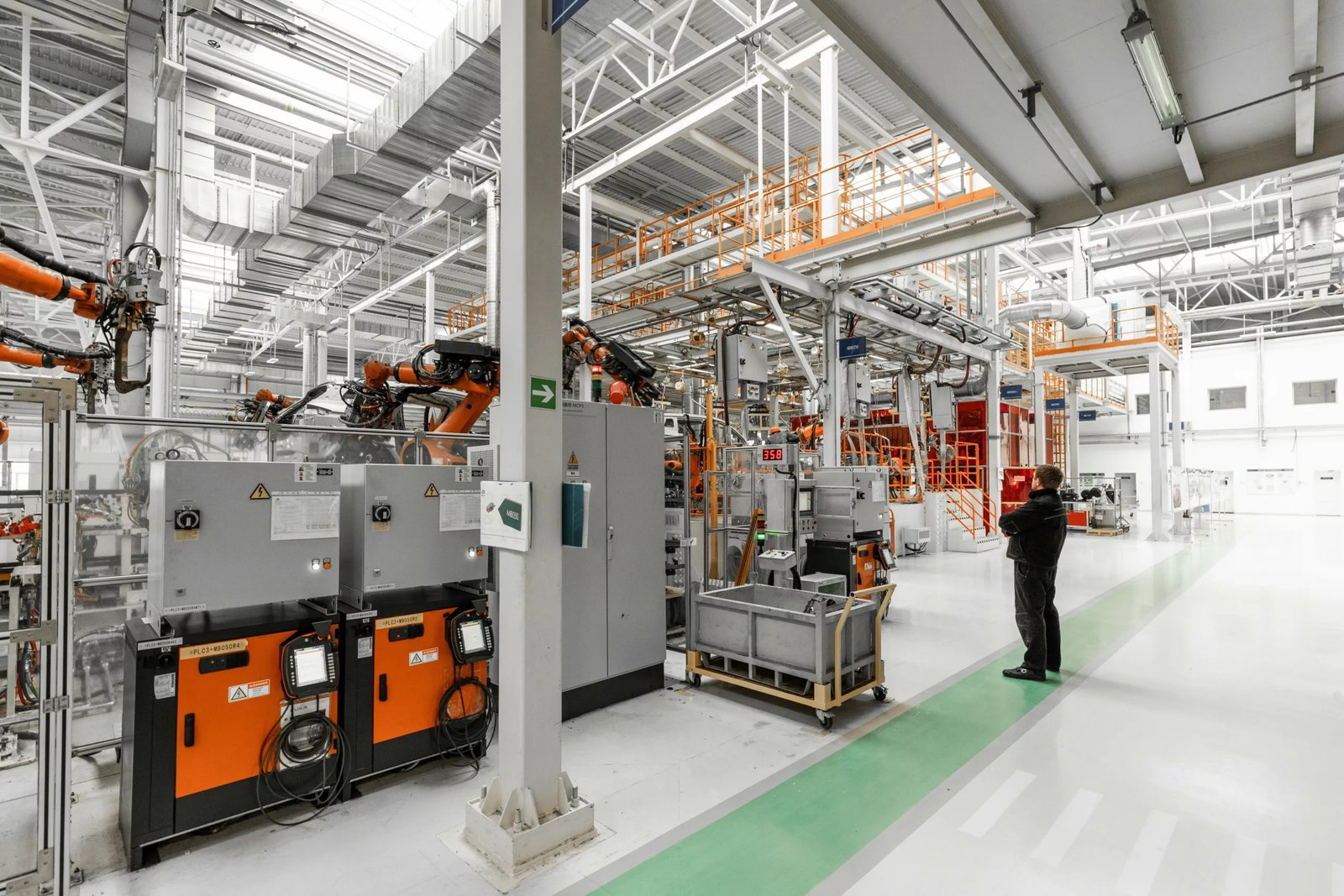
A plant is built around the thing that moves through it. In Pueblo that has meant steel, rail and wind tower sections: long, heavy product that dictates crane capacity, floor loading, bay width and door size before anyone talks about finishes. The rail mill on the south side can roll rails up to 480 feet long, up from an earlier 80 foot limit, and a building that handles product that long is a different animal from a warehouse.
We build manufacturing plants for owners who already know their process and need the building to disappear behind it. That means foundations that hold equipment without settling, floors that survive wheel loads, structure that carries the crane, and utilities sized for the real load rather than the brochure. We also build the support spaces, the offices, break rooms and maintenance shops, but we do not let them set the schedule.
Our project teams work in a market that understands heavy industry. Plant owners here do not need a primer on tonnage or heat. They need a builder who finishes the foundations before the equipment arrives, and who tells them early when the process drawing does not match the structure.
Building Around the Process
We start with the process drawing, not the architectural plan. Where the line enters, where product leaves, where the crane runs and where the pits are: those decide column spacing, building height and slab depressions. If the process layout is not final, we ask which parts are fixed and design the structure to leave room for the parts that are not.
That conversation usually surfaces issues early. A furnace pit that was drawn at the wrong elevation, a conveyor that needs a trench through a column line, a cooling water line that has no route. Finding those on paper costs a phone call. Finding them after the slab is poured costs a saw cut and a delay. Our industrial design-build delivery puts the structural engineer and the superintendent in the same room for exactly this reason.
The Work We Manage Most Closely
We manage the earthwork, site concrete, foundation and slab trade partners closely, because those are the parts of a plant job where schedule and quality are decided. Heavy equipment foundations get particular attention: reinforcement is placed to the equipment vendor's loads, anchor bolts are set with templates, and grout and leveling plates are coordinated so the machine installer is not waiting on us. Our equipment pads and foundations work is the center of this.
When the soil calls for deep foundations, we drill piers rather than argue about bearing pressure. Structural steel, crane rail and mechanical systems go to specialty trades under our supervision. For slabs under heavy rolling loads, see how we approach industrial concrete floors, because a plant floor that cracks at the first joint costs production days.
The Pueblo Industrial Base
The steelworks on Pueblo's south side began producing on April 12, 1881, was renamed the Minnequa Works in 1901, became Rocky Mountain Steel Mills in 1993 and was bought by EVRAZ in January 2007. The city's 2023 financial report lists EVRAZ Rocky Mountain Steel at 931 employees, and the electric-furnace steel, rail, rod, bar and seamless tube mills remain in operation. A new solar-powered long-rail mill was reported at $500 million with about 800 construction jobs and about 300 permanent jobs.
The other major plant story is wind. A wind turbine tower plant of nearly 700,000 square feet was sold to its current operator in 2021, and the operator broke ground on April 4, 2023 on a 900,000 square foot expansion aimed at about 10,000 tower sections a year and at least 850 new jobs. These two operations tell you what the labor and supplier base here is used to. Our pages on the Minnequa steel mill area and the wind tower plant area go further into each district.
Utilities, Power and Water
A plant is usually limited by power or water long before it is limited by land. We request load letters from the utility during design, not after, and we make sure transformer lead times are known. Process water, cooling water and wastewater have their own routes and approvals, and we map them before foundations are drawn. Fire water for a large plant often requires a loop around the building with hydrants and a pump, and we treat that as a first-order item.
Heavy-haul access is the other piece. Delivering a furnace, a press or a rolling stand means oversize loads, and the route from the interstate to your gate has to take them. We check turning radius, overhead lines and bridge limits before the equipment ships, and we build the haul road for the loads that will actually use it.
Permits and Process Approvals
Plants carry more approvals than ordinary commercial buildings. Building permits sit alongside air, stormwater and fire department reviews, and some processes need separate hazard review. The Pueblo Regional Building Department lists the 2021 International Building and Fire Codes and the 2023 National Electrical Code as in effect for the city and the county, and Colorado adopts commercial codes locally, so the first step is always to confirm the jurisdiction and its adopted edition.
The state also requires local governments that update a building code on or after July 1, 2023 to adopt an energy code at least as strong as the 2021 IECC, with a move to the state low energy and carbon code from July 1, 2026. Process buildings that are conditioned get checked for envelope and electric readiness. We submit the reviews in parallel so they do not stack up behind each other.
Schedule: Equipment Sets the Date
A plant schedule works backward from the date the first machine arrives. We draw that date, then the foundation, then the structure, then the utility tie-ins, and we verify the lead time on each item. On a big mill project with an 800-person construction peak, the trouble is rarely any one trade. It is the handoffs between them, so we write the interfaces down before they turn into claims.
We hold a weekly look-ahead with the equipment vendor and the specialty trades, and we keep a short list of items that could stop the work. Winter weather and wind delays are written into the plan, not treated as surprises.
Industries We Build Plants For
The work we do most is for metals and heavy industry and for advanced manufacturing. The first includes mill support buildings, fabrication shops and rail-related plants. The second includes tower fabrication, component manufacturing and clean assembly.
Smaller process buildings fit into the flex and light industrial category, and a shell that needs speed often becomes a pre-engineered metal building.
Send Us the Process Drawing
Show us the line, the loads and the date the equipment arrives. We will tell you what the foundation, the structure and the utilities will take, and where the drawing needs work before it is priced.
Questions and Answers
How do you size the crane runway for a new plant?
We take the crane capacity, span and duty class from the process owner or crane supplier, then design the runway beams, columns and foundations to those loads. Runway rail tolerances are tight, so we set the steel with surveyed control and check alignment before the crane is erected. Changing crane capacity later is expensive, so we ask for the maximum lift early.
Can the foundations be poured before the equipment is chosen?
Only the parts that do not depend on the machine. We can build the site, utilities, building foundations and slab, and leave pits and equipment pads for the vendor drawing. If you pour the pad before the vendor drawing arrives, you risk anchor bolt patterns that do not match and coring through fresh concrete.
What is a realistic schedule for a 100,000 square foot plant?
The work after permit splits into site and utilities, foundations and slab, structure and envelope, then equipment set and commissioning. Steel and electrical gear drive the lead times more than labor does. We build a schedule from your equipment dates and give you the critical path, rather than quoting a single number without the facts.
Do you handle oversize equipment deliveries?
We plan the route and the access for them. That includes the haul road, the turn into the site, the laydown area for unloading and the crane or skid system to set the machine. We coordinate with the equipment hauler so the foundation is ready and the crane has firm ground.
Do you work inside an operating plant?
Yes. We phase tie-ins into outages, protect walkways and control dust. The key is to agree early on the shutdown windows and what has to be live. Every crew on our site follows your lockout and permit-to-work rules.
Related
Ready to talk about your project?
Tell us about the site, the heaviest loads and the date that matters. We will review the scope and follow up with next steps for your Pueblo project.