
Service Areas
Heavy Fabrication Construction Around the CS Wind Tower Plant Area
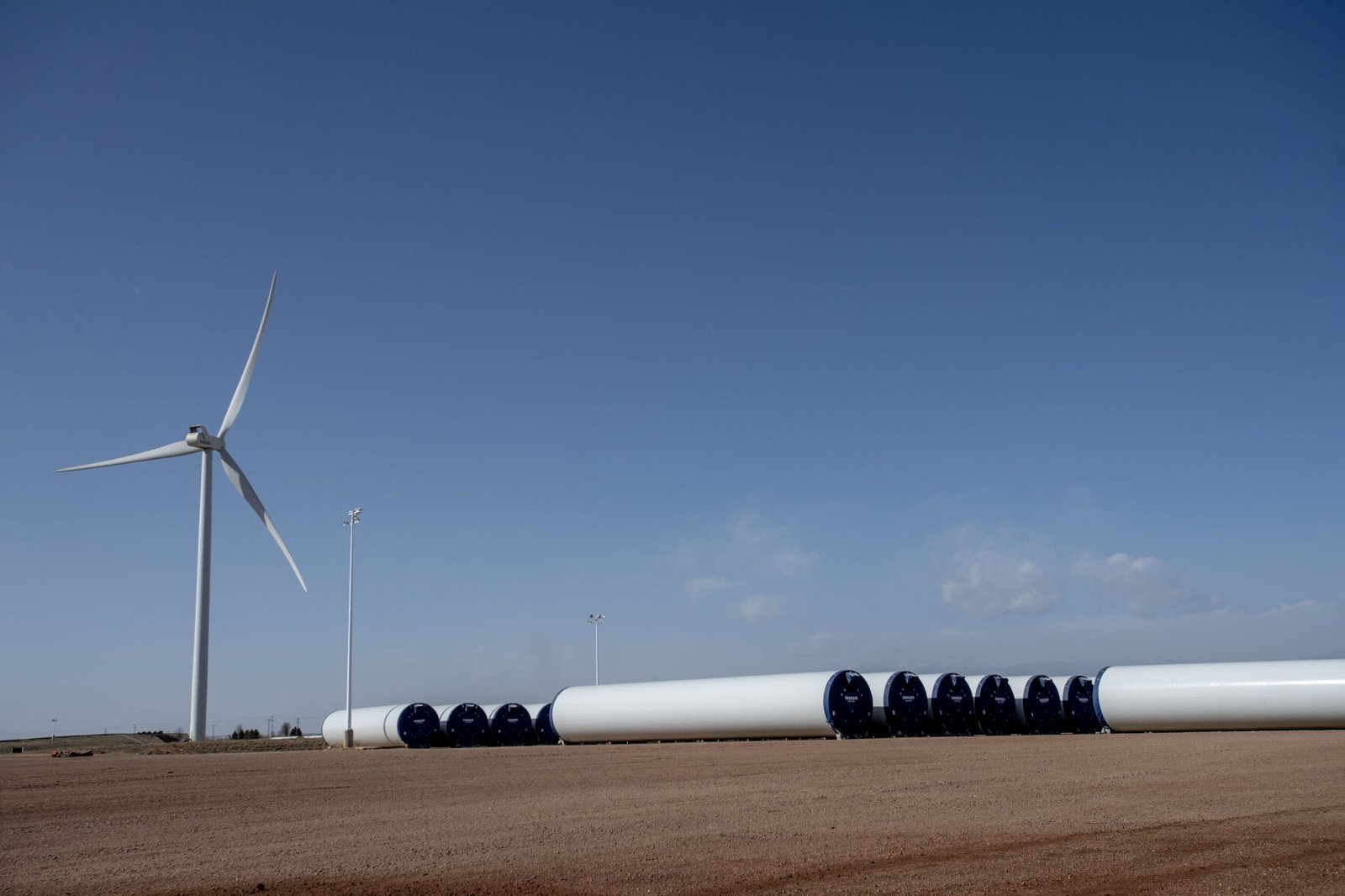
Wind tower sections are rolled-steel cylinders big enough to need a special trailer and a permit to move, and the plants that make them need floors, cranes, yards and roads sized for that. The tower plant in a Pueblo industrial park is a case in point. Vestas built a facility of nearly 700,000 square feet there and sold it to CS Wind in 2021.
On April 4, 2023, CS Wind broke ground on a 900,000-square-foot expansion with a goal of about 10,000 tower sections a year and at least 850 new jobs. Phase one was due by summer 2024, with phases two and three set for 2028. BizWest reported the same expansion on April 17, 2023, describing the plant as a takeover from Vestas Blades America. Growth at that pace pulls suppliers, haulers, coating shops and steel service centers into the neighborhood.
That is where our work comes in. We build the buildings, yards and utility systems that serve heavy fabrication, from high-bay, crane-ready buildings to industrial concrete floors that survive the weight of rolled plate and finished sections.
Slabs and Foundations for Heavy Plate
A fabrication floor is a working surface under constant abuse. Rolled plate, welding rotators, forklifts and tower sections all bear on it, often at the same time, so slab thickness, reinforcement, subgrade preparation and joint layout are set from the actual loads. We supervise the forming, placing and finishing of the concrete and keep control over flatness, curing and saw timing.
Crane runway foundations are the other critical piece. The columns, footings and anchor bolts under an overhead crane must hold alignment within tight tolerances for years. We lay out the anchor bolts with templates, survey them before the pour, and re-check after the concrete sets, so the steel erectors do not have to fight the foundation.
Buildings and Yards That Serve a Tower Plant
Tower fabrication creates demand for a ring of support space. Blasting and coating shops, plate storage, welding consumables warehouses and trailer yards all need to be near the main plant. We build manufacturing plants and metal-building shops sized for these uses, with the clear heights and column spacing that bridge cranes need.
The yards matter as much as the buildings. A finished tower section has to move from the shop floor to a trailer, and from there to a highway, without breaking a pavement or tipping a trailer. We design truck courts and trailer yards with thick concrete or heavy asphalt, tight turning geometry and proper drainage, because standing water under a loaded trailer is a recipe for ruts.
Heavy Haul Logistics and Oversize Loads
Oversize loads change how a site is planned. Entrances must be wide enough for long trailers, turning radii must accommodate rigs that cannot back up, and weight limits on culverts, bridges and utility crossings must be verified. We check haul routes before design is final, because moving a gate after the pavement is poured costs far more than sketching the route on day one.
Staging is the other issue. Sections wait for coating, inspection and loading, and that waiting requires ground that is firm, level and out of the way. Our heavy-haul access roads and stabilized yard pads give owners a platform that stays usable after a rain.
Metals, Energy and Manufacturing Neighbors
A wind tower plant draws on the same supply chain as the rest of Pueblo's heavy industry: steel plate, welding wire, coatings, rail cars and trucking. Owners in metals and heavy industry and in advanced manufacturing often sit within a few miles of each other and share the same labor pool and the same roads.
We build for both and understand what makes them different. A coating shop needs ventilation and containment. A plate warehouse needs crane coverage. A trailer yard needs drainage and lighting. Each starts with the same question: what will be moved, and how heavy is it.
What Heavy Fabrication Space Costs
Heavy fabrication space costs more per square foot than a standard warehouse for specific reasons: thicker slabs, deeper footings, crane runway steel, larger electrical service and higher clear heights. Those items are not optional, but they can be right-sized. We help owners separate the loads that are real from the loads someone wrote down out of caution.
Phasing also shapes the budget. A plant that plans to grow in stages can build the foundations, utilities and yard for the final size in phase one and add the buildings later, or it can build only what it needs now and pay for the rework. We lay out both options with real numbers, before any steel is ordered.
Permits for a Fast-Moving Industrial Park
A growing industrial park brings steady permit traffic. Grading, drainage, fire access, utility connections and building permits all need approval, and the reviewers are juggling several expansions at once. Our permitting coordination puts complete packages in front of reviewers and answers comments the same week.
Colorado sets commercial building codes locally, not statewide, so we confirm the adopted edition for the exact parcel rather than assuming. Energy and electrical requirements are changing too, and for a plant with large process loads, early coordination with the serving utility often decides whether the schedule holds.
Building for the Tower Plant Supply Chain?
Tell us the loads, the cranes and the trailers, and we will lay out the building and the yard. For rail-served options, see the steel mill area, and for flex space near the airport, the airport industrial park.
Questions and Answers
What size slab does a wind tower fabrication floor need?
It depends on the loads, not on a rule of thumb. The engineer sets thickness and reinforcement from the plate, rotators and forklifts that will bear on it. We build to those drawings and control subgrade, flatness and curing so the slab performs as designed.
How do crane runway foundations differ from ordinary footings?
They have much tighter alignment tolerances, and they carry both vertical loads and horizontal forces. Anchor bolts must sit within a narrow window. We use templates, survey before the pour and re-check afterward.
Can a supplier build next to the plant while it is expanding?
Yes, but expect busy roads and tight labor. The plant's expansion is planned in phases through 2028, which means trucks and crews will be around for years. We plan haul routes and deliveries to avoid conflicts.
What does a trailer yard for tower sections need?
Thick pavement, wide turning geometry and good drainage. Loaded rigs concentrate weight on small contact areas, so a thin asphalt section will rut quickly. We design the section for the loads and slope it to drain.
How early should I engage a contractor for a supplier building near the plant?
As early as the site is chosen. Layout decisions on cranes, doors and yards are cheap on paper and expensive after pouring. Preconstruction tells you the budget and the schedule before you commit.
Related
Ready to talk about your project?
Tell us about the site, the heaviest loads and the date that matters. We will review the scope and follow up with next steps for your Pueblo project.