
Building Types
Distribution Center Construction in Pueblo, Colorado
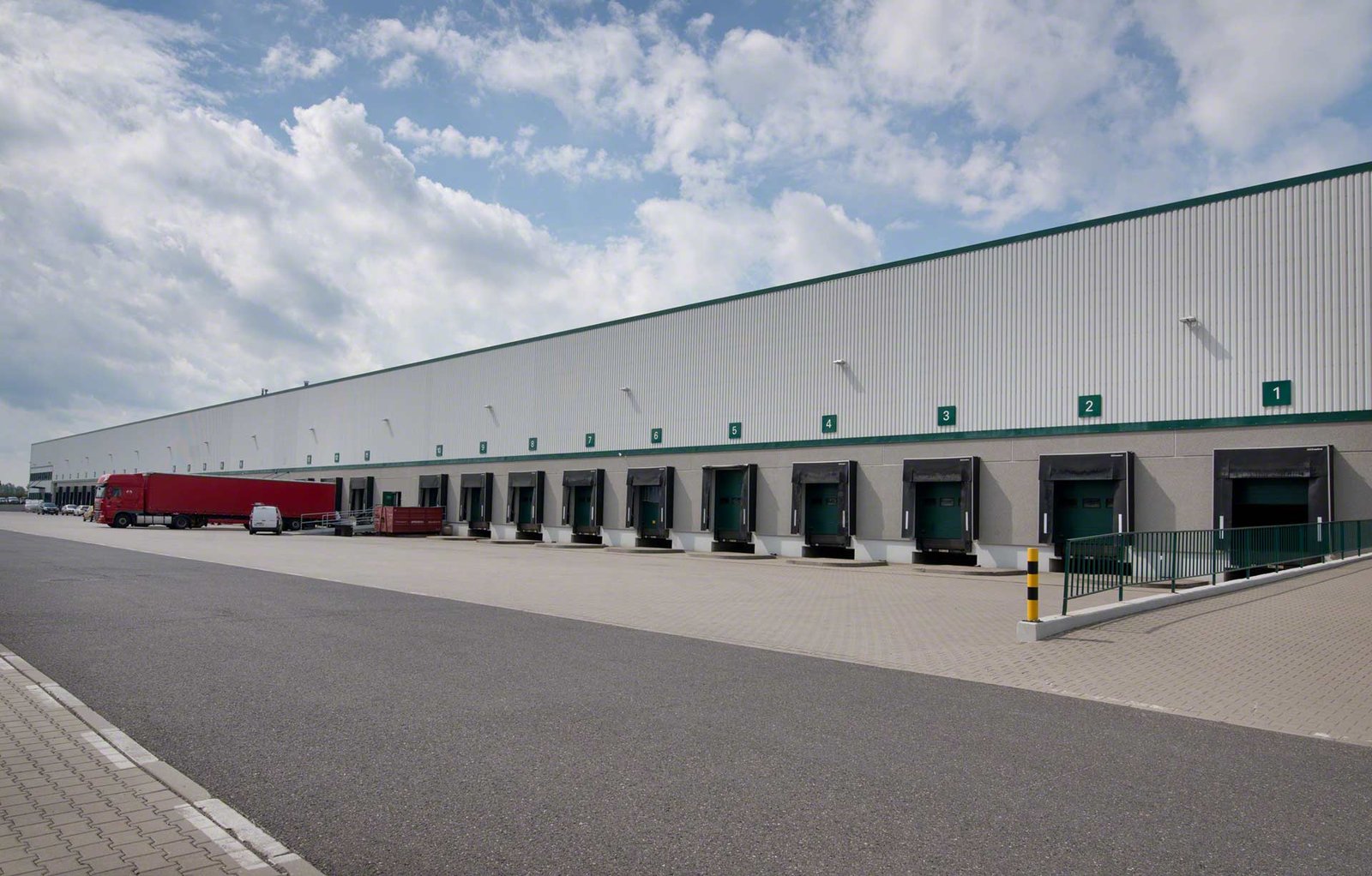
Trailer count decides a distribution center before square footage does. A building with forty doors and a court that holds twelve trailers will choke on its first busy week, and no amount of racking fixes that. In Pueblo we start from the truck: the turning radius, the stacking lane at the gate, the apron depth, and how a loaded rig gets from the public road onto your pavement without blocking it.
The ground here helps. Pueblo sits where Interstate 25, US 85 and US 50 meet, with rail from both BNSF and Union Pacific. The State Highway 47 loop off US 50 and the Pueblo Boulevard expressway give a distribution tenant two ways to reach the interstate without crossing town. We build to those connections, because a distribution center is only as good as its worst driveway.
What a Pueblo Distribution Center Package Includes
We deliver a distribution center as one coordinated package: grading and detention, utilities and fire water, the floor and shell, the dock line, the truck court and the car parking. The floor is the part owners underestimate. A distribution slab carries pallet racking, rolling equipment and, in many layouts, conveyor or sortation lines, so reinforcement, joint spacing and flatness are set to the equipment list, not to a generic number.
Docks get their own attention. Door spacing, leveler pits, trailer restraints and dock lighting all have to agree with the apron slope, which has to drain away from the building and still leave trailers level. The concrete in the court is usually heavier than the slab, since trailer landing gear and tractor drive axles are harder on pavement than a forklift. Our work on dock aprons and loading zones and truck courts and trailer yards is how we get that right.
Site Conditions That Change the Plan
The north side of Pueblo, around Dillon Drive and the Drew Dix Parkway interchange at I-25 exit 104, is already crowded with retail and traffic. A distribution site there has to deal with turn lanes and signal timing before it deals with a building. East of town, State Highway 47 runs as a six-lane divided road from the I-25 exit 101 interchange to a diamond interchange with US 50 and SH 96, and the freeway section has interchanges at Jerry Murphy Road and Troy Avenue. That State Highway 47 corridor is where larger parcels with easy truck access tend to be found.
Crossings matter. The freeway section of SH 47 crosses Fountain Creek, and Union Pacific tracks cross the highway near its start, so drainage, floodplain and rail setbacks can eat usable acreage. We ask for the survey and the drainage report early, and we walk the site before we agree to a footprint. The same discipline applies on the south side, where Pueblo Boulevard runs from I-25 exit 94 north to US 50 and where plans for a six-lane widening and a new US 50 interchange are described as awaiting approval. A planned interchange can change a driveway permit.
How We Sequence the Work
We build distribution centers in the order that keeps trucks and cranes apart. Grading, utilities and detention come first because the pond often controls where the building sits. Next are the footings and the slab, then the shell, then the dock equipment, then the paving. If the court is poured last, the slab and shell crews can use the site as a staging area and the paving crew gets a clean subgrade after the heavy traffic has stopped.
We keep one superintendent responsible for the whole site so the dock supplier, the racking contractor and the fire sprinkler installer are not waiting on each other. Racking needs a finished floor and a cleared aisle. Sprinkler rough-in needs the roof closed. We lay those out as a milestone list at kickoff and we update it every week. For owners expanding an existing building we have a separate path through distribution center expansions, where the operating floor has to stay live.
Who Is Looking for Distribution Space Here
Demand comes from a few directions. Plant owners need finished goods and parts staged near the mill. Regional retailers and parcel carriers want a shorter run to the Front Range. Defense and aerospace tenants at the former depot site want secure storage and loading. PuebloPlex reports current tenants in manufacturing, warehousing, distribution and rail car storage and maintenance, and its plan supports industrial, storage, research and rail-related uses.
The city lists commercial and industrial construction about 10 to 15 percent below the national average, which lowers the entry cost for a first building. We see that most clearly with operators who want to test the market with one box and expand later. Read our notes on ecommerce fulfillment and on the related logistics fulfillment center if your operation is pick-and-pack rather than pallet in, pallet out.
Services That Sit Next to the Building
Most distribution jobs involve a stack of site services beyond the shell. Electrical duct bank runs to the dock line and the yard lights. Fire water has to reach the sprinkler riser and the hydrants at the pressure your insurer expects. If you need a cross-dock rather than a storage building, see our page on truck terminal and cross-dock buildings, because the dock ratio and the floor are different.
We also build the long, plain pieces of the site that owners forget to budget: security fencing, a gate house, car parking sized to shift overlap, and an emergency access lane around the building. Ask us for a single list at the start so nothing is added late.
Safety on a Working Truck Site
Truck traffic and construction do not mix. We separate delivery routes from work zones, use flaggers at shared entrances, and keep the construction entrance clean so mud does not reach the public road. When a distribution center is built next to a live operation, we fence the work, mark pedestrian routes and brief your drivers.
Inside the building, the main hazards are dock edges, leveler pits and overhead work above racked product. We lay out pit covers and edge protection during the slab pour rather than after it, and we schedule overhead work so it does not run above an area where racks are being loaded.
Bring Us Your Truck Count
Tell us how many doors, how many trailers and where the freight comes from. We will work through the court, the floor and the permit, and give you a plain number for the whole site.
Questions and Answers
How many trailer stalls should a distribution center have?
It depends on dock count and dwell time. A common starting point is more than one trailer stall per dock door, plus staging for empties. We work from your throughput figures and size the court so trucks can maneuver without backing across a public street. The cost of extra court is low compared with the cost of a jammed yard.
Where in the Pueblo area is the easiest truck access?
Sites on the State Highway 47 loop and along US 50 near the airport give direct routes to I-25 without crossing the center of town. Pueblo Boulevard connects I-25 exit 94 to US 50 on the south and west side. The best parcel depends on where your freight comes from, and we check interchange geometry and turn lanes before we recommend one.
Can you expand a distribution center while we keep shipping?
Yes. We phase the work so docks stay in service, separate the construction traffic from the live court and tie in new utilities during planned shutdown windows. The usual pinch point is the existing dock line, so we plan the temporary dock use before we break ground.
What floor do we need for narrow-aisle racking?
Narrow-aisle and very narrow-aisle trucks demand tight flatness and levelness tolerances. We write the slab specification to the truck manufacturer's requirements, and we plan the pour, joints and curing to meet it. Slabs placed for ordinary pallet storage usually will not meet very narrow-aisle tolerance.
Related
Ready to talk about your project?
Tell us about the site, the heaviest loads and the date that matters. We will review the scope and follow up with next steps for your Pueblo project.