
Industrial Construction Services
Distribution Center Expansions Around Pueblo
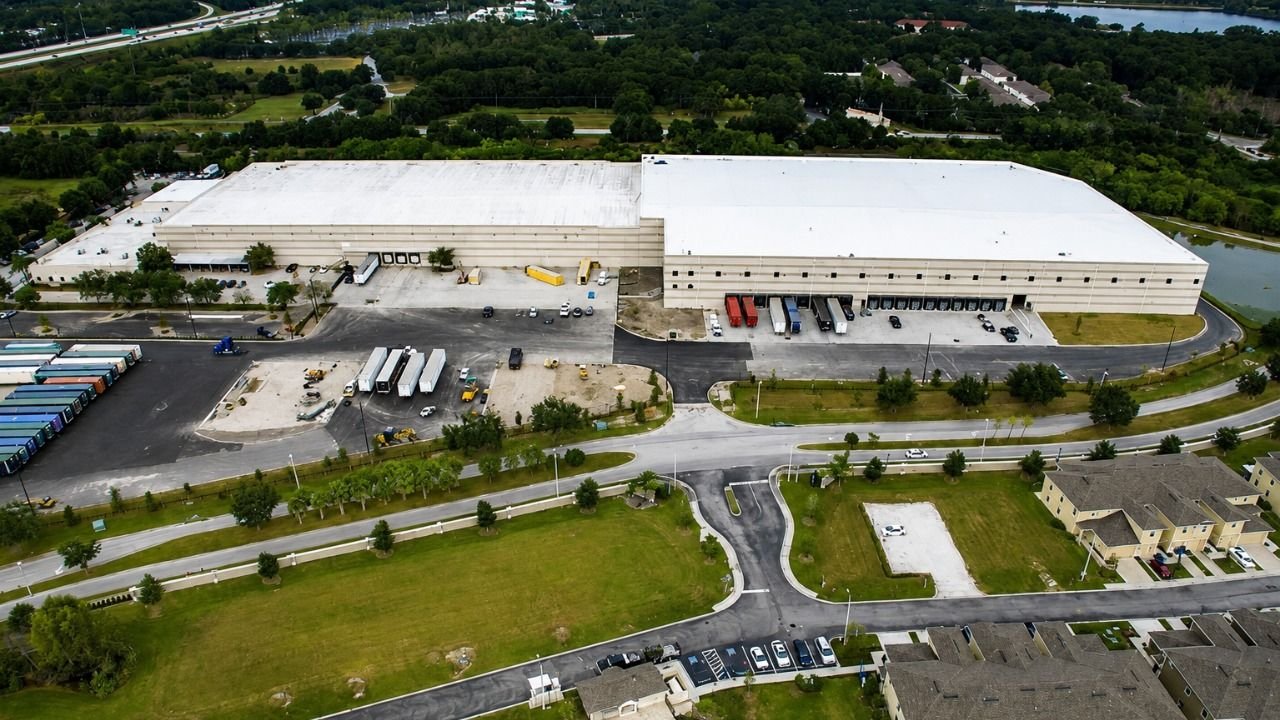
Expanding a running distribution center means building next to trucks that cannot stop. Orders go out on a schedule that does not care about your construction, drivers need to find the right door, and forklifts cross the line between old floor and new every minute. We expand distribution centers in Pueblo, Pueblo West and the Arkansas Valley, adding bays, docks, yard and storage while the existing operation stays open.
Access shapes these projects. State Highway 47 runs as a six-lane divided road east from the I-25 exit 101 interchange to US 50 and SH 96, where the end interchange gives access to the airport. I-25 exit 104 serves Dillon Drive and Drew Dix Parkway on the north side, and Pueblo Boulevard connects exit 94 on the south side to US 50 in Pueblo West. Distribution users here sit on those roads for a reason, and the expansion has to respect how their trucks use them.
We start with the operation, not the building: peak days, truck counts, the dock schedule, the staging lanes and where a forklift actually travels. Then we design the expansion to protect those flows.
What changes when the building is live
A live expansion has three conflict zones: the tie-in between old and new, the shared yard and the utilities. The tie-in is where a wall comes down, a slab joins or a roof ties together, and each of these can interrupt shipping. The yard is shared by trucks, trailers and sometimes construction equipment, and a new dock wall can cut off the lane a trailer uses to back in. Utilities cross the work area, and electrical or fire protection shutdowns need approvals and notice.
We map each of those conflicts before work starts and plan the temporary measures: dust walls, temporary doors, rerouted forklift lanes, trailer parking relocations and temporary fire protection. The goal is that the people in the old building notice the construction as little as possible, and your insurer and fire official see a plan for every impairment. We also protect the existing floor and racking with plywood, matting and barricades along every haul route, and we sweep the dock approaches at the end of each shift so debris never reaches a forklift tire.
Phasing the work around the dock schedule
We divide the expansion into phases that match the dock schedule: new foundations and walls outside the active area, then the tie-in over a short window, then interior finish. Heavy work such as piers, tilt-wall panel lifts and steel erection is scheduled for low-volume periods, and we tell you which days are the loudest or the most disruptive.
A safety lead and a site superintendent meet with your operations team every week. We keep trucks, forklifts and workers separated by barricades, signs and flaggers. For wider site and yard needs, we coordinate the dock aprons and loading zones, and for staged work in a working building, see how we handle phased construction on occupied sites.
Schedule and the peak-season constraint
Operators in ecommerce fulfillment and logistics all have a peak, and the expansion has to be done before it. We back-schedule from the date you need the new docks: slab and foundation first, then the walls and roof, then fit-out. Long lead items like dock levelers, overhead doors, racking and conveyors are ordered early and tracked.
In Pueblo, the dry months are the best for concrete, steel and roofing. We try to put the exterior work in that window and leave interiors for winter. Where a tie-in needs a weekend, we plan the work as a long shift with enough crews to finish before Monday, and we have a rollback plan if the weather turns. A temporary wall that can be closed up in an hour is part of that plan, so Monday's first truck loads from a sealed building no matter what happened overnight. We also keep a spare pump, spare saw blades and a second concrete source on call for tie-in pours.
Where we expand buildings
We work along the I-25 and US 50 corridors, across north Pueblo and the area around the Pueblo Mall corridor, on the loop of the SH 47 corridor and west through Pueblo West. Each area has different access, utility and permit conditions, and we price them accordingly.
We can take on buildings farther along the valley, as far as Walsenburg to the south, 48 miles away on I-25, or La Junta to the east, 68 miles along US 50. Travel and per diem appear as their own line in the estimate, so you can see the cost of distance.
Permits, fire protection and the existing building
An expansion is reviewed against the code that applies to the new work and to the existing building. The Pueblo Regional Building Department lists the 2021 IBC, IEBC and IFC among the codes in effect, and the city says commercial approvals currently take about 75 days. The IEBC governs how much of the existing building has to be brought up to current standards when you add on.
Fire protection is the biggest item. Sprinkler design, fire walls, smoke control, access lanes and hydrants may all be affected. We bring in the fire protection engineer early and meet the fire official before the drawing set is final. For the building envelope, see how our approach to warehouse shell construction handles walls, roofs and docks.
Tell us how your docks run today.
Send the site plan, the dock count and your peak schedule. We will walk the building and give you a phasing plan and a price.
Questions and Answers
Can the existing building stay in operation during the expansion?
Usually yes. We phase the work, build barriers, protect the floor and reroute traffic. Some tie-ins need short shutdowns, and we plan those for the least busy times. We write the plan with your operations team so everyone knows what to expect.
What is the biggest risk to an expansion schedule?
Permits and long-lead equipment. A late fire permit or dock equipment delivery can hold the whole job. We start permit reviews early and order long-lead items as soon as the design is firm.
How do you tie new slabs to old slabs?
With dowels, keyed joints or a new thickened edge, depending on load and settlement. If the old slab has moved, we may saw-cut and replace a strip to get a smooth transition. A forklift crossing a bad joint will tell you about it right away.
Do we need more truck court and trailer parking?
Probably. More docks usually means more trucks, and the yard is easy to underbuild. We check the queue and maneuvering space for the new docks and add truck court if needed.
Can an expansion add refrigerated space?
Yes, but it changes the floor, insulation and utilities. We can build a cold section as part of the expansion, with vapor barriers and underslab heat as needed. We discuss the operation before we pick the system.
How does the IEBC affect my addition?
The existing building code determines what upgrades are required in the old structure when you add on. Sometimes it's minor, and sometimes it's fire protection or egress work. We ask the building department early and tell you what to expect.
Related
Ready to talk about your project?
Tell us about the site, the heaviest loads and the date that matters. We will review the scope and follow up with next steps for your Pueblo project.