
Building Types
Truck Terminal and Cross-Dock Construction in Pueblo, Colorado
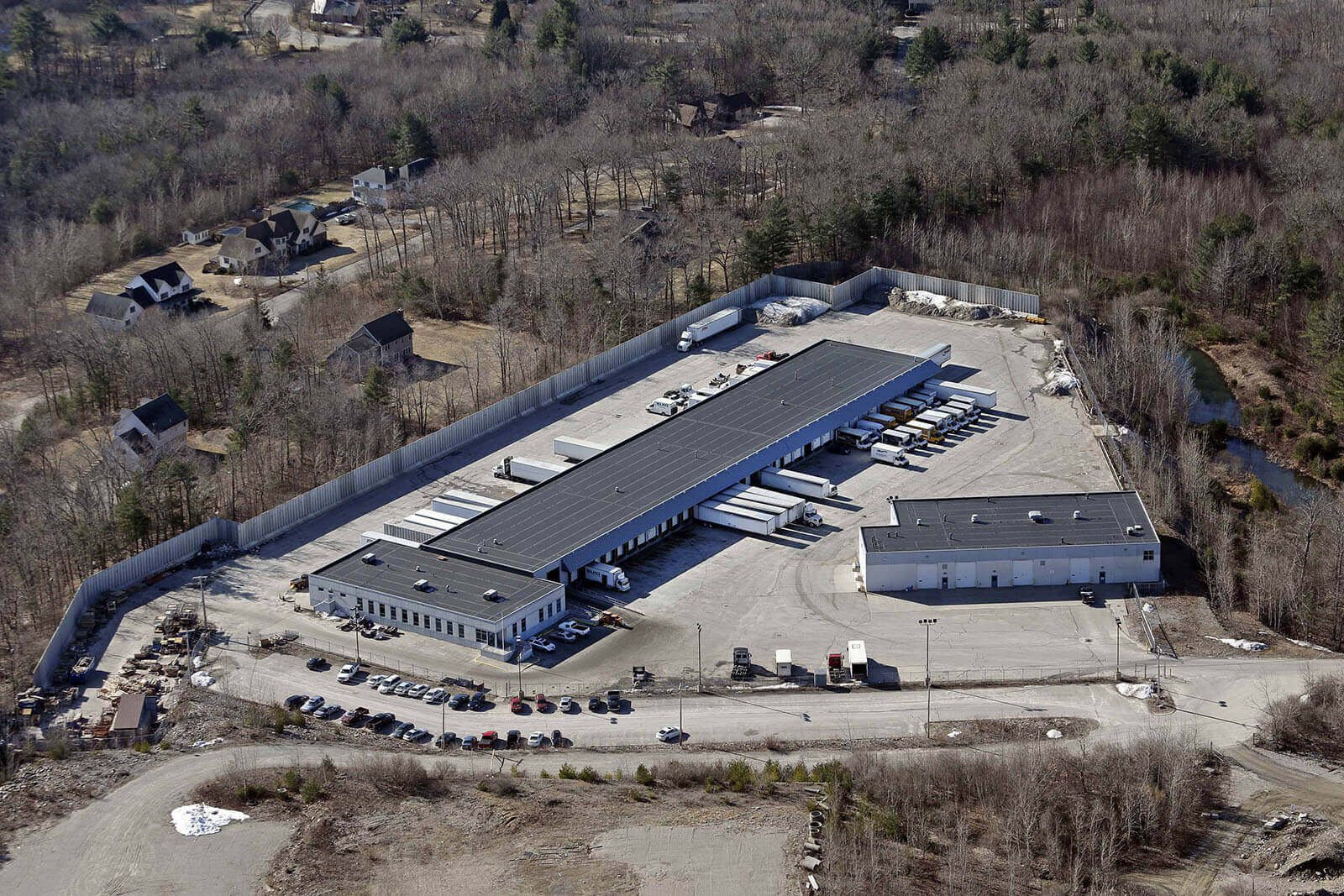
A truck terminal lives or dies on how fast a trailer turns. Freight comes in on one side, is sorted across a narrow dock floor and leaves on the other side, and the building is only a roof over that flow. We build terminals and cross-docks where the pavement is the real structure: heavy concrete aprons, a deep truck court, a gate that lets rigs stack off the road, and a floor that stays flat under constant forklift traffic.
The I-25 corridor through southern Colorado is made for this work. Pueblo sits where I-25 and US 85 share a route and US 50 crosses it. Walsenburg is 48 miles south of Pueblo and 36 miles north of Trinidad on the same interstate, and Trinidad is a junction of three BNSF subdivisions. A carrier running between the Front Range and the south needs a break point somewhere along that line, and a terminal is what makes it work.
Dock Geometry and Truck Movement
A cross-dock is a long, narrow building with doors on both long sides. Width is set by the floor operations, usually a narrow strip that makes the floor cheaper to build and more efficient to run. Doors are close together, and the apron outside has to be deep enough for a truck to back in at an angle. Every extra foot of apron adds concrete, but a short apron adds congestion every day.
The entrance matters as much. A gate, a scale, a guard shack and a stacking lane that holds several trailers off the public road are all part of the job. We draw the truck paths over the site plan at feasibility and test turning radius with the actual trailers, including the oversize ones. Our work on dock aprons and loading zones is the foundation of this.
What We Build for Carriers and Shippers
We deliver the dock building, the truck court, trailer parking, employee parking, a maintenance shop where needed, fuel and wash facilities if the owner wants them, lighting, fencing and gate controls, and the stormwater system that goes with all that pavement. For owners with an existing terminal, we expand the dock line, replace failing aprons and add trailer stalls.
Pavement is the largest share of the work on many terminals. Our truck courts and trailer yards package covers subgrade, base and concrete or asphalt sections designed for loaded tractors and landing gear. Where a site needs a fenced yard with controlled access, fencing and security integration is part of the same contract.
Terminals Along the Interstate and the River
Sites along I-25 from Pueblo to Trinidad suit north-south freight. Trinidad has I-25 running through it, US 160 serving the city, and the foot of Raton Pass just south. Walsenburg has I-25 on its eastern edge, US 160 through the center, and Colorado Highway 10 leading northeast toward La Junta. See our Walsenburg and Trinidad pages.
East-west freight follows US 50. La Junta is 68 miles east of Pueblo, with US 50 running through it and BNSF freight trains and Amtrak both on the line. A terminal there serves the eastern plains and the farm towns of the Arkansas Valley. We build in each of these places and know the permit offices.
Keeping People and Trailers Apart
Dock work carries the highest injury risk in freight: forklifts, moving trailers, falls from dock edges. During construction we keep delivery traffic and pedestrian routes separate, and we set up traffic control at entrances. In the finished terminal, we design in features such as trailer restraints, dock lights, bollards, guarded pits and pedestrian walkways with painted crossings.
Where we expand a live terminal, we phase the work around operations and agree on safe zones with the operator. Night work is common, since many terminals run at peak when everyone else sleeps, so lighting and communication matter.
Why Terminals Cluster Where They Do
Terminals follow the road and the rail. Pueblo's connection of Interstate 25, US 85 and US 50, with freight service by BNSF and Union Pacific, makes it the natural break point. South of the city, the Raton Pass route carries I-25 and the BNSF tracks over a summit at 7,834 feet, and the rail route has grades up to 3.5 percent, which makes the pass a hard stretch for rail and trucks alike.
That geography shapes which loads go where. A carrier that splits a run at the pass can break freight in Trinidad or Pueblo, and a carrier serving the Front Range can hold freight in Pueblo. Our logistics and distribution work and our distribution center page show how those pieces connect to storage.
Where the Dollars Go
Concrete and paving are the biggest line items. A terminal court uses much more concrete than the building, and thickness, reinforcement and joints depend on traffic. Dock equipment, lighting and fencing follow. Utilities are usually modest compared with a plant, but a maintenance shop or fueling station can change.
We price in clear options: concrete versus asphalt in the trailer parking, number of doors, dock equipment grade. The city says commercial and industrial construction costs about 10 to 15 percent below the national average, which gives a terminal developer room for heavier pavement sections. Spending more on the court usually saves repair money later. A terminal with heavy traffic should be built like a road, not like a parking lot, and our logistics fulfillment center page covers the lighter-duty side.
Start With the Truck Count
Give us the door count, the trailer count and the lane. We will draw the court and give you a price for the whole terminal, not just the building.
Questions and Answers
How deep should the apron be for a cross-dock?
Common practice is 120 to 135 feet from the dock face to the far edge of the court for tractor-trailers, with more where trailers park in the maneuver zone. We test the turning paths of your actual equipment on the site plan. A short apron is the most common design error we see.
Should the truck court be concrete or asphalt?
Concrete holds up better under landing gear and constant turning, so it is the usual choice at the dock. Asphalt can work in lighter trailer parking areas at lower cost. We often recommend concrete in the dock apron and asphalt behind it, and we price both.
Can you add doors to an existing terminal?
Often, yes. We extend the building or add a new dock line, tie in the slab and rebuild the apron. The tricky part is keeping existing doors working during construction, and we phase the work with operations.
Why are terminals in southern Colorado concentrated along I-25?
The interstate and the BNSF line follow the same corridor over Raton Pass, and Pueblo is the largest city on the route. Trinidad is a junction of three BNSF subdivisions, and Walsenburg interchanges with a short-line railroad. Those facts make the corridor a natural freight line.
What permits does a truck terminal need?
Expect building, stormwater, access and sometimes air and fuel permits. State highway access requires a driveway permit from the state. We start the access application early, since it is often the slowest item.
Related
Ready to talk about your project?
Tell us about the site, the heaviest loads and the date that matters. We will review the scope and follow up with next steps for your Pueblo project.