
Industrial Construction Services
Industrial Fencing and Security Integration in Pueblo
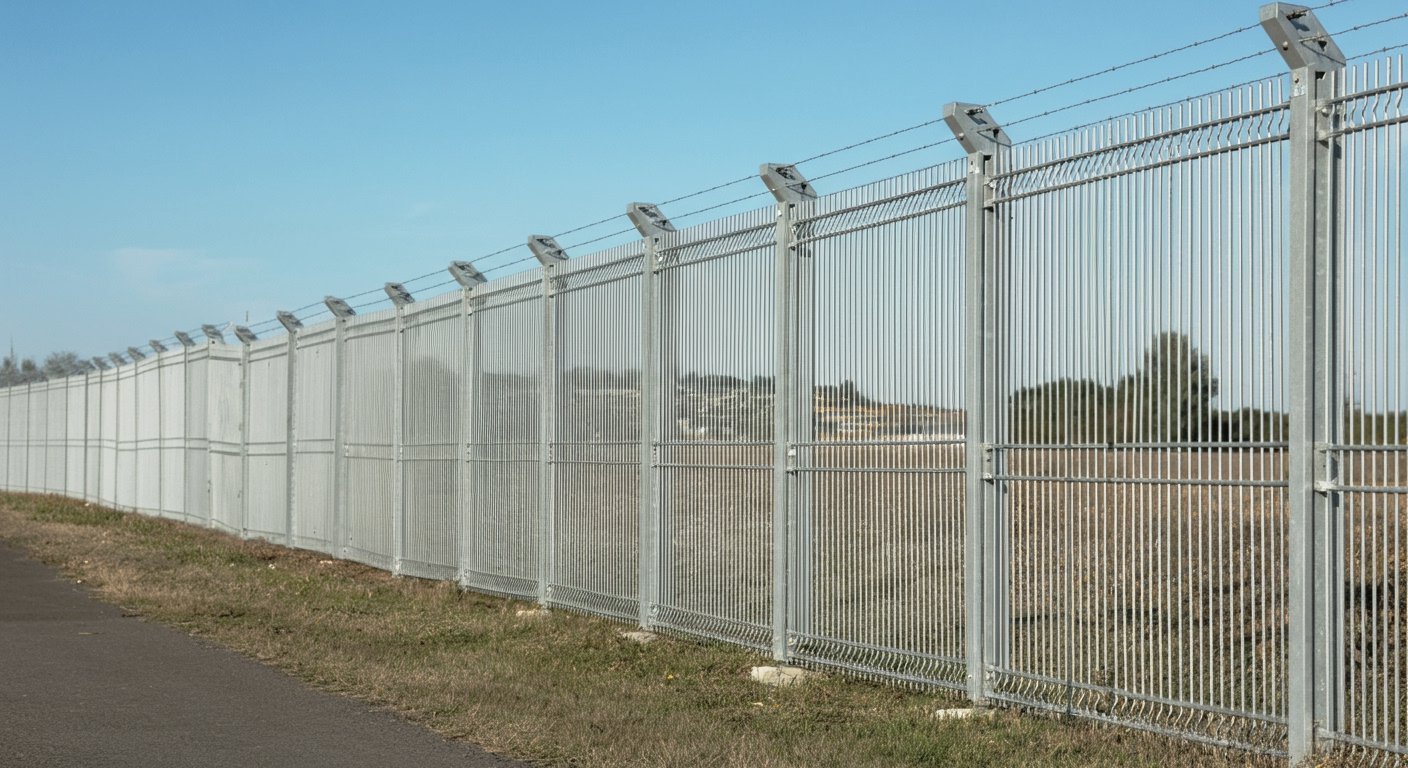
The fence line is where security starts and where it most often fails. A fence with a gap under the gate, a vehicle gate that sticks in January, or a camera mounted where no power was run all turn a security plan into a punch list. We build industrial fencing, gates and security integration in Pueblo and the Arkansas Valley as a single system: posts, fabric, gates, operators, readers, cameras, lighting and the conduit that feeds them.
Pueblo has some of the biggest fenced ground in Colorado. Pueblo Memorial Airport covers 3,872 acres, and the PuebloPlex redevelopment is working across a site of roughly 16,000 acres with more than 600 buildings. Whole parcels there are managed as controlled areas, and tenants need their own secure edge inside a larger one. That calls for fence design that treats ground, wind and trucks as part of the spec.
We do not sell a catalog of fence. We walk the perimeter with your security lead, find the real vulnerabilities and design around them. That usually means looking at the low spots where water cuts under the fabric, the corners where a vehicle could ram through, the culverts that cross the line and the places where a tree or a stockpile gives a climber a step.
What the fence package includes
Perimeter fence is the visible part: chain link with heavy-gauge fabric and top rail, anti-climb mesh, ornamental steel where appearance matters, or precast panels where sound and sight lines matter. Posts are set in concrete below frost depth and sized for the fabric height and wind load. We add barbed wire or security topping only where the owner's security plan requires it. Where the ground is uneven we use rolled fabric or stepped panels with a bottom tension wire or a concrete curb, so the fence follows the grade without leaving a gap a person or an animal can use. Along drainage ways we hang swing panels that let water through during a storm and drop back in place.
Gates are the harder part. Swing gates, slide gates and cantilever gates each suit a different site, and the choice depends on the setback, the grade and the truck length. We install operators, safety loops, edge sensors, keypads, card readers and intercoms, and we coordinate the gate track, footings and operator pads in the same package.
Vehicle safety, emergency access and life safety
A gate is a moving machine that sits across a truck lane, so it needs safety devices that work. We install photo eyes, loops and edge sensors, set closing speeds, and test the operator after every adjustment. Emergency access matters too: fire departments need a way through the gate when the power is out, and we set up Knox boxes, fail-safe operation or manual release as the local fire official requires.
On a working plant, we also separate pedestrian and vehicle gates, so employees are not walking through the truck lane. Our parking lot and gate design are done together, so the queue length at the gate matches the number of trucks that arrive at shift change.
Where secured sites are common in the metro
Controlled industrial sites are a regular part of Pueblo's market. PuebloPlex rents over 1,000 earth-covered magazines as storage, has more than a dozen tenants in aerospace and defense, railroad and research, and is hosting a 150,000 square foot defense complex for solid rocket motors and propulsion. Sites like that need fence, access control and inspection areas built to meet tenant security requirements.
Airports and rail yards have similar needs. A tenant at the airport industrial park has to handle airfield access rules, and a tenant at PuebloPlex may need a separate secure area inside an already controlled campus. We ask early which agency or landlord sets the requirement, because a fence that satisfies a tenant but not the landlord has to be rebuilt. For defense and aerospace tenants, we work from the written security plan and do not guess at the standard.
Design the system together, trench once
We draw fencing, gates, power, data and lighting on the same sheet. Camera poles are placed with sight lines and lighting in mind, and conduit is sized for the readers, cameras and spare capacity. If an electronic security vendor is separate from us, we leave open sleeves and pull strings, and we coordinate the install schedule with their crew.
Our yard lighting and electrical work carries the power and the poles that cameras ride on, so the same trench does both jobs. After install we test every gate, every reader and every camera view at night, and we hand over a short operations manual.
What changes the price
Perimeter length, fence height, gate count and operator type are the main drivers. Rock, rubble or utility conflicts can slow post setting, and sloping ground needs stepped panels or custom grading. Automatic gates cost more than manual ones, and a slide gate on a heavy track costs more than a swing gate on a pair of posts.
Security electronics are the swing factor: card readers, license plate recognition, cameras, intercoms and network gear. We scope the civil and conduit side firmly and carry the electronics as an allowance until the owner picks a vendor. For tenants in data centers or similar sensitive operations, the allowance can be larger than the fence itself.
Pieces that connect to the fence
Fence rarely stands alone. It crosses drainage, meets truck entrances and follows the edge of paving. We build the truck courts and trailer yards that the gates open onto, and we set the fence line to give the plant room to turn.
At buildings that need hardened edges, such as an aircraft hangar or data hall, we coordinate with the building contractor so security goes in before the owner moves equipment. Ask us to include bollards, planters and crash-rated barriers where the risk calls for them.
Walk the perimeter with us.
Send the site plan and the security requirements you have to meet. We will walk the fence line, mark the gaps and give you a design and a price.
Questions and Answers
How tall should an industrial security fence be?
Most industrial perimeters use fence around 6 to 8 feet, with security topping where policy requires it. Taller fence and tighter mesh slow a climber but cost more and add wind load. We match height to the threat and to what your insurer or landlord asks for.
What type of gate suits a busy truck entrance?
Cantilever slide gates are common because they do not need ground track that fills with debris or snow. Swing gates need room to open. The choice depends on setback, grade and truck length, and we draw the truck swept path before choosing.
Can the fence be installed before the building is finished?
Yes, and often it should be. A fenced site reduces theft of materials and controls access. We install the perimeter first, leave temporary construction gates, and add the permanent gates and readers near the end.
Who maintains the gates and readers?
Operators and readers need periodic service, and we can set up a maintenance plan or hand off to your vendor. We leave a short maintenance sheet and spare keys, and we tell you which parts wear first so you can stock them.
How do you handle fire department access?
We follow the local fire official's requirements, which usually mean a key box, a manual release or an emergency override on automatic gates. We confirm the details during permit review so the gate does not have to be rebuilt at inspection.
Related
Ready to talk about your project?
Tell us about the site, the heaviest loads and the date that matters. We will review the scope and follow up with next steps for your Pueblo project.