
Industrial Construction Services
Stabilized Parking Lots for Pueblo Plants and Yards
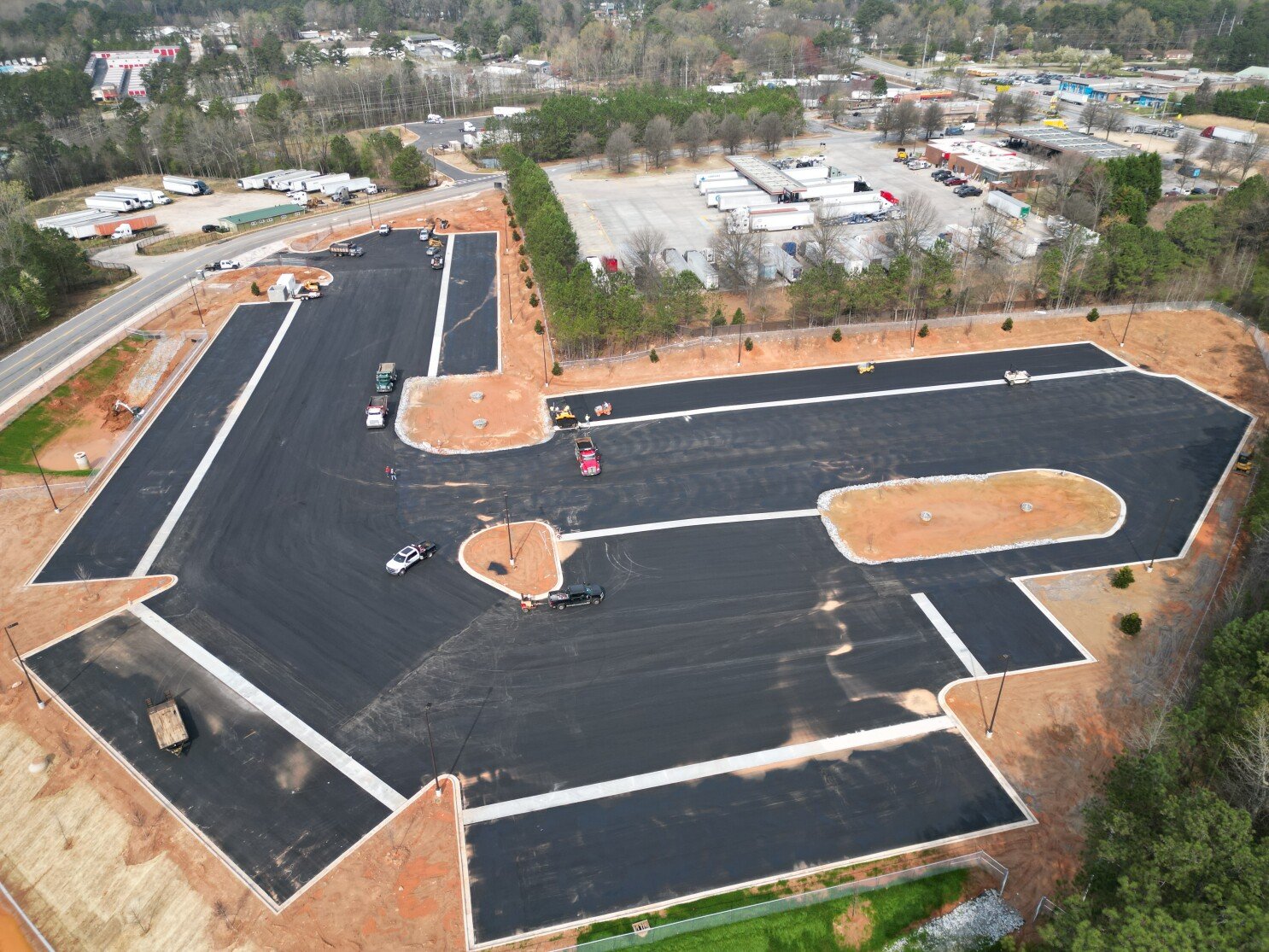
Shift change is the moment a plant parking lot gets tested. Several hundred cars arrive in a short window, trucks line up at the gate, and the first week of mud or ice turns a lot that looked fine at the ribbon cutting into a maintenance headache. We build stabilized parking lots for industrial plants across Pueblo, Pueblo West and the Arkansas Valley, with the base, drainage and edge details that keep a lot working through freeze, thaw and heavy traffic.
Parking at an industrial site is not retail parking. The same lot may carry employee cars on one side, delivery trucks cutting across the other, and a forklift or yard tractor crossing in the middle. When the wind tower plant added a 900,000 square foot expansion with at least 850 new jobs planned, those jobs needed somewhere to park every day, and the lot is part of the building program, not an afterthought. The same is true at the steel mill, which the city's 2023 financial report lists at 931 employees.
We start with who and what uses the lot, how many, and when. Then we design the section for that mix, and we put the numbers in front of you early so nobody discovers a thin pavement section after the first winter: asphalt, concrete or stabilized aggregate, with drainage that moves water to a swale or storm inlet instead of letting it sit at the doors.
What goes into a stabilized lot
The work begins with subgrade testing and a decision about how much weak clay to remove or treat. We then place a compacted base, geotextile where the soil is soft, and the surfacing the lot calls for. Employee lots might be a standard asphalt section. Truck and trailer areas need much thicker pavement or concrete aprons where tractors turn and drop gear.
We also build the details people only notice when they fail: curb and gutter, wheel stops, striping, ADA stalls and accessible routes, lighting conduit, and fencing at the perimeter. A lot that drains but has no snow storage ends up with piled ice at the main door. We lay out stalls and snow areas on the same sheet, and we leave room for a plow to push without burying the next row of cars. Island curbs get sized for the plow blade, not just the drawing.
Mixed traffic, snow and the north side of the building
Pueblo has long sunny stretches, but it also gets freezing nights and wet snow that melt and refreeze on a flat lot. The north side of a big building holds ice for weeks. We pitch the lot away from doors and walkways, and we keep the high point of the lot upstream of the entrance so melt runs out and away. Light poles go at islands, not in the drive aisle where a truck will clip them, and storm inlets sit at the low points where we can reach them with a vac truck.
Where employee cars and trucks share a gate, we separate them with striping, islands and curbs so a driver walking to the time clock is not stepping between trailers. Larger sites may need a second entrance on the highway side. Our work on fencing and security integration usually runs in the same footprint, so gates and card readers are placed once.
Permits, accessibility and which jurisdiction you are in
The same Pueblo lot can sit in the city, the county, or inside an industrial park with its own covenants, and the review path changes with it. The Pueblo Regional Building Department lists the 2021 IBC and the 2023 National Electrical Code among the codes currently in effect, and the Pueblo County Building Division enforces 2021 International Code Council codes with its own Title 15 amendments. We confirm which office reviews your site before drawings go in.
Accessible stalls and routes, drainage design and lighting conduit are all part of the review, so we draw them together with the paving, not as add-ons. The details are in our site concrete and ADA compliance work, which we coordinate with the lot itself.
Lots that connect to the rest of the site
A parking lot is rarely a single scope. It connects to the plant entry, the truck court, the guardhouse and the drainage system. We build truck courts and trailer yards and heavy parking sections in the same mobilization as employee lots so the work shares grading and drainage, and the owner ends up with one coherent site instead of three patches.
For operators in advanced manufacturing, we also coordinate with the building contractor on the final grade at doors, so a lot does not slope toward a dock or into a utility trench, and we build the matching dock aprons and loading zones to the same grades. If the lot is going in before the building, we protect the base from construction traffic or phase the final paving until the heavy deliveries are done.
Keeping the plant running while we build
Working around a live plant means cones, flaggers and a written traffic plan. We build lot work in phases so some stalls stay open, and we agree on gate times and haul routes with your security and operations leads. Trucks that bring in base and asphalt do not use the employee entrance, and equipment is parked in the staging area, not along the main drive. If a lane has to close, we say so in writing the day before.
Every crew member gets a site orientation covering your plant's rules for hot work, ground disturbance and traffic. Before we dig, we confirm utility locations and pothole conduit crossings. After paving, we sweep, stripe and walk the lot with your safety lead so nothing is left as a trip hazard.
Plan the lot before the building opens.
Send the shift count, the truck traffic and the site plan, and we will return a section, a phasing plan and a number you can budget around.
Questions and Answers
Should an employee lot be asphalt or concrete?
Most employee-only lots work well in asphalt, which is cheaper to build and easy to patch. Areas with turning trucks, dumpsters and fuel or chemical handling usually justify concrete because asphalt softens and rutting follows. We price both for the actual mix of traffic and let you decide with numbers.
How long does a new industrial parking lot take to build?
A mid-size lot can go from clearing to striping in a few weeks in dry weather. The variables are subgrade repairs, utility conflicts, asphalt plant availability and weather. In winter we plan for pause days, and we avoid placing asphalt when the mix cools too fast to compact.
What happens if the soil under the lot is weak?
We find it during the proof-roll and fix it before paving. The fix may be removing and replacing soft material, adding geotextile, or treating the soil in place. Skipping that step is the most common reason industrial lots rut and crack within the first two years.
Can you keep part of the lot open while we work?
Yes. We phase the lot in sections, set temporary walkways and signs, and coordinate closures with your shift schedule. Some owners shift employee parking to a gravel area during construction, which we build first and reuse as overflow afterward.
Related
Ready to talk about your project?
Tell us about the site, the heaviest loads and the date that matters. We will review the scope and follow up with next steps for your Pueblo project.