
Industrial Construction Services
Stabilized Laydown Yards for Pueblo Industrial Projects
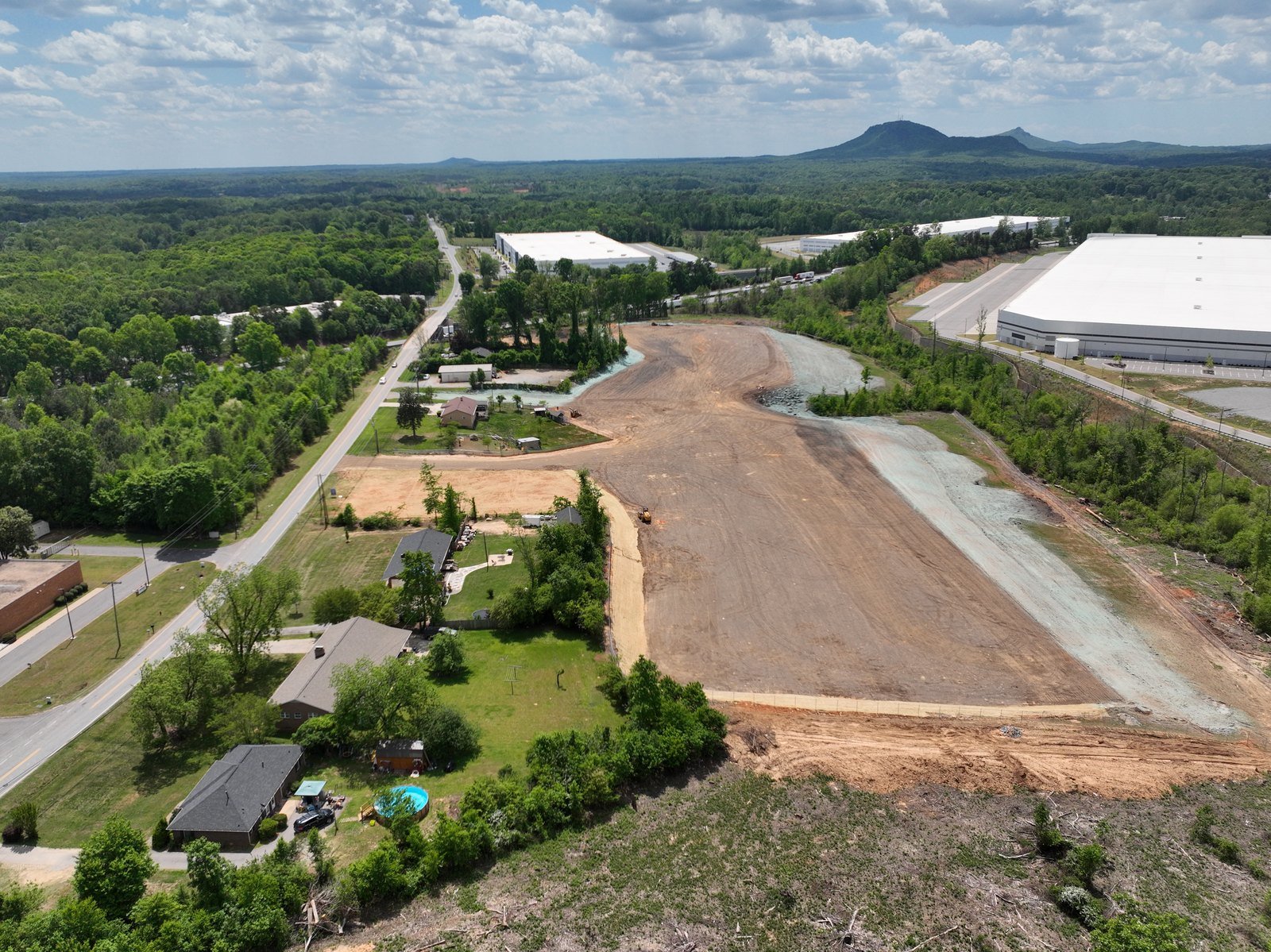
A laydown yard is the first piece of a plant project and the last one anybody budgets for. Before a crane sets a column or a mill hall gets its first pour, someone has to decide where the rebar bundles, anchor bolt cages, conduit reels, steel members and rental equipment will sit, and how a loaded truck gets in and out without cutting up the ground in the first wet week. We build stabilized laydown yards in Pueblo and the Arkansas Valley for plant owners, general contractors and equipment vendors who need a working surface before they need anything else.
The scale in this market is not small. The solar-powered long-rail mill on the south side was reported with about 800 construction jobs and a 240 megawatt on-site solar field, and the wind tower plant in a Pueblo industrial park broke ground on a 900,000 square foot expansion aimed at about 10,000 tower sections a year. Work like that runs on yards, not on a spare corner of the lot. Every one of those crews needed somewhere to stack material, park cranes and turn trucks around.
Pueblo sits at 4,692 feet, with long dry stretches and hard afternoon storms that turn bare clay into a skating rink. A yard built for that has to be graded, drained and stabilized for the weight that will actually be parked on it. We build to the load, then tell you honestly what the surface will and will not carry.
What a laydown yard has to handle around Pueblo
Material comes to Pueblo job sites by rail and by heavy haul, and it arrives in lengths and weights that ordinary lot paving was never designed for. Steel for a mill hall, formed tower shell sections, transformers and crane mats all want a flat, dry, well-drained place to sit for weeks or months. The city's own economic summary puts commercial and industrial construction cost about 10 to 15 percent below the national average, which leaves room to spend on a proper base instead of patching a bad one all season.
The owners of each manufacturing plant we work for usually have two jobs happening at once: the new work and the plant that keeps running next to it. A yard that sheds mud onto the plant road, or sends silt toward a drain, creates a second problem. We lay out the staging area so loaded trucks never cross the operating side, and so crane and delivery traffic stays on its own loop. Our heavy-haul access roads work usually starts in the same mobilization.
Grading, base, stabilization and drainage
The scope starts with stripping topsoil and soft material, then proofing the subgrade with a loaded truck, not a guess. Where the native clay or silt is weak we chemically treat it or excavate and replace it with compacted road base, with geotextile under the base where the soil is wet. Slopes are set so water leaves the yard in sheets toward a swale or a detention pond, never through the middle of a stack of material.
Surfacing depends on how long the yard lives. A six-month steel yard may be compacted crushed base with a dust palliative. A multi-year equipment staging area may get a thick aggregate section, a concrete pad under the crane position, or asphalt on the main haul loop. We price the real life of the yard so you do not pay for asphalt you will rip out, or cheap gravel you will rebuild twice.
How we sequence the yard ahead of the main work
We build the yard first and we build it before the utilities, so trenching contractors are not working in a bog. That means survey, silt control, grading, base and drainage in the first weeks, with a stabilized construction entrance where the yard meets a public road. Gates, haul loops and the crane pick zone get painted or staked so the hauler's driver knows where to go at six in the morning.
We also plan the yard's second life. A good laydown area often becomes the permanent truck court, trailer parking or outdoor storage once the building is up. If that is the plan, we set grades and base thickness for the final use from day one, and link the work to stabilized parking lots or a permanent paved section later, so you build once.
What moves the price of a laydown yard
The big drivers are area, subgrade quality, base thickness and how far we haul aggregate. Weak soil and a high water table are the usual surprises. The second driver is duration: a yard rented for a season is priced differently than one that will stay as a permanent pad. Crane mats, geogrid and fabric are real money, but they are cheaper than a stuck crane.
We give the yard a number before the building has a number, and we split it into survey, earthwork, base, drainage, entrance and restoration so you can see where the money goes. If a location near Pueblo West or out on the eastern plains has a longer haul for aggregate, that shows up as its own line, not buried in a lump sum.
Schedule: dry weather, long lead steel and the first delivery
The yard has to be ready for the first delivery, and the first delivery is usually driven by steel or precast lead time, not by us. We back-schedule from the date the first truck is promised. In Pueblo's dry season a stabilized yard can go in within a couple of weeks of notice to proceed on a typical lot. In a wet spring the same yard needs drying time and more drainage work, and we say so before we agree to a date.
For projects tied to a mill shutdown or a tight outage, we stage material off site first and bring it in only when the crane is on the ground. Plant managers working with metals and heavy industry schedules know how costly a missed window is, and the yard is the cheapest place to keep a window from slipping.
Tell us where the steel is coming from.
Send the site address, the delivery dates and the heaviest piece you expect. We will walk the ground, tell you what the yard needs and what it costs, and give you a start date we can hold.
Questions and Answers
How big should a laydown yard be for a plant expansion?
Plan on enough room for the largest delivery plus the pick zone, plus the next delivery waiting behind it. For a steel building that is often an acre or more per active crane, but it depends on how fast material goes up. We walk the site with your superintendent, mark the stacks on a drawing, and size the yard from that instead of a rule of thumb.
Can the yard become permanent parking or outdoor storage later?
Yes, and it is the cheapest way to do it. If we know the final use, we set base depth, drainage and edges so a paved or concrete section can go over the same footprint after construction. Tell us before we cut grades, because it is expensive to rebuild a yard that was only designed for six months.
What do you do about dust and mud at the entrance?
We build a stabilized construction entrance with clean rock and a place for trucks to shake off, then sweep and water as needed. In dry Pueblo summers we use water trucks or a dust control product. In wet weather we keep loaded traffic off soft areas and stage material on the drained portion of the yard until the ground firms up.
Do you handle crane pads and mats inside the yard?
We build crane pads to the crane supplier's load chart, which means a compacted and often thickened section with mats on top. We ask for the ground-bearing pressure early, because it drives base depth. The supplier signs off on the pad before any pick.
When does a yard need a permit or an erosion plan?
Most yards that disturb a meaningful area need grading and erosion control approval, and the review time depends on whether the site is inside the city, in the county, or on a private industrial park with its own rules. We prepare the grading plan and the erosion measures with the permit package so the yard is not the item holding up the start.
Related
Ready to talk about your project?
Tell us about the site, the heaviest loads and the date that matters. We will review the scope and follow up with next steps for your Pueblo project.