
Industrial Construction Services
Stormwater Detention and Drainage for Pueblo Sites
The 1921 flood put water as deep as 18 feet through downtown Pueblo and devastated the Union Avenue district, after which the Arkansas River was rerouted. Nobody building a plant here needs to be told that drainage is a serious subject. Large paved areas shed water fast, and a plant yard with dozens of acres of pavement sends that water somewhere.
Our drainage work handles the part of site development that most often draws reviewer comments and cost surprises. We build detention and retention basins, storm sewers, inlets, culverts, swales, outlet structures and erosion controls, and we install them in an order that keeps the rest of the site working. Pipes go in before the pavement, outlets before the pipes, and the basin before the first heavy rain.
Industrial sites carry extra requirements. Truck washing, fuel handling, process areas and chemical storage can all affect what is allowed to reach the storm system, and a good design keeps those flows apart. We build to the engineer's plan and raise issues early when the plan meets real ground.
Water in the Arkansas Valley
The valley is semi-arid, but storms can be sudden and heavy, and creeks run through developed areas. State Highway 47, for example, crosses Fountain Creek east of Dillon Street, and parcels near the SH 47 corridor often sit close to channels and floodplain edges. Any site there needs a clear understanding of where its outfall goes.
Lake Pueblo shows the other side of the story: water is carefully managed in this region. Pueblo Dam, a buttress concrete dam 250 feet tall and 10,230 feet long, impounds up to 489,116 acre-feet in Lake Pueblo. That legacy of engineered control means reviewers know what a well-built structure looks like and expect the same on a private site.
Review, criteria and who signs off
Drainage plans are reviewed by the city or county, and sometimes by a drainage district or state agency, depending on the parcel and the outfall. Criteria vary, so we confirm which applies as early as possible. Our permitting and entitlements coordination work covers the drainage report, the grading permit and the erosion control plan together.
The city has said commercial approvals currently take about 75 days, and drainage comments can be the reason a package goes through a second round. We help the design team respond quickly, and we flag constructability issues such as outlet elevations that cannot be built or basin slopes that cannot be mowed or maintained.
Detention basins, pipes and outfalls
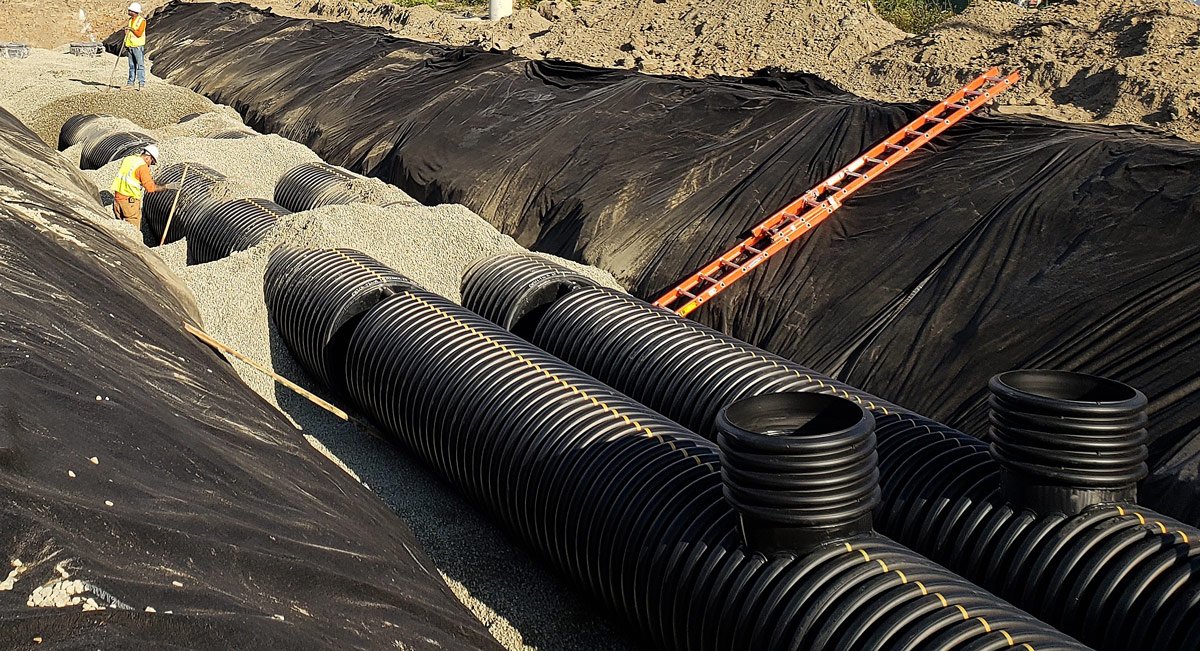
A detention basin is an excavation with a controlled outlet. We shape the basin, line or stabilize the bottom as designed, set the outlet structure and spillway to the plan, and verify elevations by survey before sign-off. A sloppy outlet can make a basin drain too fast or too slowly, so we treat this item with the care of a structural pour.
Underground work includes storm sewer pipe, manholes, inlets and culverts, often laid in the same trenches as other site utilities with proper separation. We test the system, televise longer runs where specified and clean it out before turnover so that a construction-season's worth of silt does not end up in the first rain.
Sequence is half the job
The basin often doubles as a sediment trap during construction, so we build it first and protect the outlet. Storm drains follow the rough grading, and inlets are protected with filters until paving is finished. The order of work decides whether the rain turns a yard into a mess or leaves it clean.
Pavement and drainage must be built together. Falls in a truck court are small, often one or two percent, and a mistake of a few tenths holds water against the apron. We survey every layer and check inlets and joints before paving crews arrive.
Working with weather
Excavations fill with water if a storm hits mid-pour or mid-trench, so we monitor forecasts, keep pumps on site and plan critical work for stable weather. Pipe trenches are left open for as short a time as possible, and we backfill and compact in the same shift when we can.
Seasonal conditions matter. In cold weather, saturated subgrade can freeze and heave, and we protect finished layers from freeze-thaw cycles. Seeding and permanent stabilization are timed to the growing season where the plan calls for vegetation.
What changes a drainage budget
The size of the basin, the length of the outfall and the depth of the pipe set most of the cost. A parcel with a convenient receiving channel costs far less than one that needs a long offsite line or a pump. Owners comparing parcels for cold storage or other paved-heavy uses should price drainage early, since big roofs and big yards create big flows.
We offer value engineering where it exists, such as shifting a basin to use a natural low spot, using swales instead of pipe, or combining detention with landscape areas. We also stay clear of options that save money now and cost maintenance forever. A basin with slopes too steep to mow, or an outlet that clogs every spring, is a bill the owner pays for as long as the plant runs.
Cold climate adds one more consideration. Ice in outlet structures and culverts can block flow in late winter, so we detail inlets and orifices with openings large enough to pass meltwater and we avoid low spots where standing water would freeze across a truck route.
Show us where the water goes
Send us the grading plan and the nearest outfall. We will check the detention volume, the pipe routes and the construction sequence before the first pipe goes in.
Questions and Answers
How big does a detention basin need to be?
The engineer sizes it from the paved area, the soil, and the release rate allowed by the reviewing agency. A site with more impervious area needs more storage. We build to those numbers and can suggest layout changes that reduce the footprint, like underground storage, though they cost more.
Who maintains the system after construction?
Typically the owner, under a maintenance plan that the reviewer may require. We provide as-built drawings, outlet details and a short guide on inspection and cleaning. Basins and inlets need regular clearing, and a neglected system loses capacity quietly.
Can we build on a site near a creek or floodplain?
Often yes, with the right elevation, setbacks and permits. Floodplain development may require elevation certificates and special review. We help assess feasibility during preconstruction and recommend whether filling, raising the floor or moving the building is the better option.
What happens if it rains heavily during construction?
Sediment controls and the temporary basin do their work, and we inspect after each storm. We repair damage, clean out traps and document what we did. A good plan makes a storm an inconvenience, not a crisis.
Do industrial yards need special treatment before water leaves?
Sometimes. Fueling, washing and chemical areas may need containment, oil and sediment separators or separate drains. Your environmental consultant and the reviewing agency determine the rules, and we build what the plans call for.
Related
Ready to talk about your project?
Tell us about the site, the heaviest loads and the date that matters. We will review the scope and follow up with next steps for your Pueblo project.