
Industrial Construction Services
Drilled Pier Foundations for Pueblo Industrial Structures
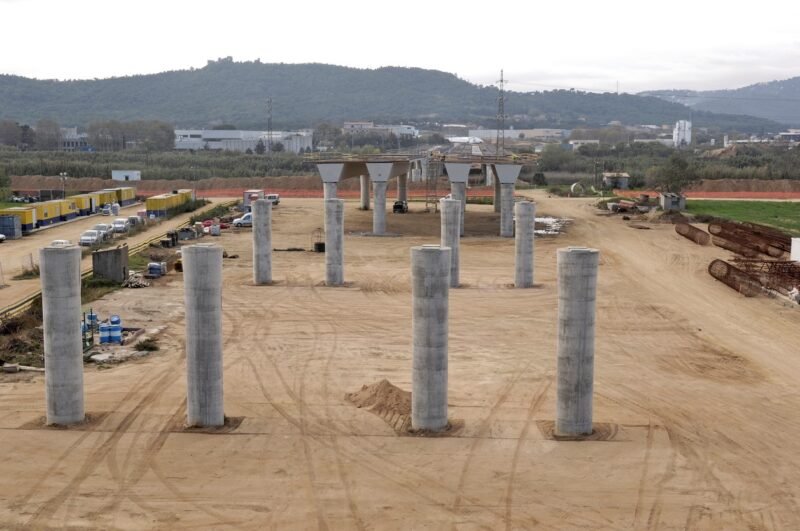
A drilled pier is a hole you have to keep honest. You drill it, you look at what comes out, you clean the bottom, you set a rebar cage, you place concrete without letting the sides cave, and you write down what happened. Done well, it is one of the most reliable ways to carry a heavy load. Done carelessly, it hides its flaws underground. We build drilled pier foundations for industrial structures in Pueblo and the Arkansas Valley and we keep a record for every shaft.
The Pueblo area asks a lot of a pier. State Highway 47 crosses Fountain Creek on the north side, and State Highway 45, Pueblo Boulevard, passes just south of Lake Minnequa. Ground near creeks and lakes is wetter and looser than ground on the benches, and a shaft that stands open in dry soil may cave a few hundred yards away. We drill, test and adapt shaft by shaft, not by the plan sheet alone.
Drilled piers support building columns, tower bases, crane runways, equipment frames, retaining walls, sign and pole structures and bridge-like crossings inside plants. The same equipment can handle shafts from a couple of feet across to much larger.
Piers, caps, grade beams and the rest
We drill the shafts to the design depth and diameter, set casing where soils will not stand, clean the bottom, place the rebar cage with proper spacers and pour the concrete by pump or tremie. We form and pour the caps and grade beams that tie piers together, and we set anchor bolts for columns to survey control. The finished top elevation is checked so steel can be set without shimming.
Many projects call for different pier types on one site: straight shafts in good soil, belled piers where bearing is the limit and rock sockets when the load needs to reach bedrock. Our broader deep foundations and piers scope describes how the choices fit together, and drilled piers are the method we use most for heavy, concentrated loads.
Drill, log, verify, pour
Every shaft has a log: location, elevation, depth, material encountered, groundwater, casing used and concrete volume. We compare what comes out of the hole to the boring log, and we call the engineer when it does not match. The inspector watches the bottom clean-out and the cage placement before concrete is released.
Concrete is placed with a tremie or a pump line that stays below the surface of the mix when the shaft is wet. Slump, strength and placement rate matter, and we plan trucks so a pier is not started unless the concrete to finish it is on site. We also coordinate the next scope, for example the tilt-wall industrial buildings that rest on them, so panels and piers match in the field.
Open holes, rigs and utilities
Drilled shafts are open holes. We cover them at the end of each shift, barricade the work area and keep personnel out of the swing radius of the rig. Rebar cages are stored flat and lifted with spreader bars. Casing and spoils are managed so they do not block the haul route or bury a utility.
Before drilling we locate underground utilities, pothole the shaft locations when conflicts are likely, and review overhead clearance. In a live plant, we write the lockout and permit steps into the pier plan. Trucks and rigs move on stabilized ground, which is why drilling often starts after our laydown yard work is in.
Groundwater, caving soils and rock
The three conditions that change a drilled pier job are groundwater, caving soil and rock. High water can mean casing, slurry or dewatering, and each adds time. Loose sand and gravel can collapse an open shaft in minutes. Rock may need a core barrel or a rock auger, and rock sockets take longer than soil shafts. We budget for all three with unit rates and tell you which ones the borings suggest.
Tolerance is the other consideration. Column anchor bolts need to land within a fraction of an inch of plan position, and a pier that is drilled slightly out of plumb or off location can complicate steel. We survey layout and confirm the drilled position before concrete, then verify final locations before steel is released.
Production rates and sequencing
A typical drilled pier crew can complete several shafts per day in good conditions, but that number falls quickly with rock, caving or water. We schedule from the pier list, not an average. Concrete delivery is the other limit: the plant, the truck count and the haul time all matter. We confirm supply before the rig arrives.
The foundation sequence usually runs from piers to caps and grade beams, then to anchor bolts, steel and slab. Where the building sits near the SH 47 corridor or alongside the Pueblo Boulevard corridor, we plan access to keep rigs and trucks off public roads during peak hours.
Where we drill
We drill across the metro and out along the Arkansas Valley, from the north industrial areas through the south side and out along US 50. The rig cost is the same, but mobilization changes with distance, and we state it separately so you can compare options. Projects for aircraft hangars, logistics buildings and heavy industry all use piers in this region.
For a hangar or large-span building, see how we approach an aircraft hangar, and for logistics sites, our work for logistics and distribution owners often relies on piers for tall racking and canopies. Call before the boring program is finished and we can help you plan the pier locations.
Hand us the pier schedule.
Send the structural drawings and the boring logs. We will price the shafts, caps and grade beams and tell you how long the drilling will take.
Questions and Answers
What diameter and depth are typical for an industrial pier?
Diameters from 18 inches to several feet are common, and depths range from 10 feet to more than 40 depending on soil and loads. The structural engineer sets both. We then confirm that the borings support the design and suggest changes where the field conditions differ.
How do you keep shafts from caving?
We use temporary casing, drilling slurry or a different drilling method when the soil needs it. The choice depends on soil, groundwater and depth. We decide during the first shafts and write the method into the log.
Do you inspect and test piers?
Yes. A special inspector observes drilling and concrete placement, and we record the data. Integrity testing or load testing is available when the engineer requires it. We schedule those tests so they do not hold up steel.
Can you drill inside a building?
With a low-headroom rig, yes. Access, ventilation and spoils removal are the limits. We tell you what the rig needs and what the floor can carry before work starts.
What happens if the pier hits an obstruction?
We stop, document it and call the engineer. Solutions include coring, removal, relocating the pier or switching to another foundation type. The contract should show how obstructions are priced.
Related
Ready to talk about your project?
Tell us about the site, the heaviest loads and the date that matters. We will review the scope and follow up with next steps for your Pueblo project.