
Industrial Construction Services
Deep Foundations and Piers for Pueblo Industrial Buildings
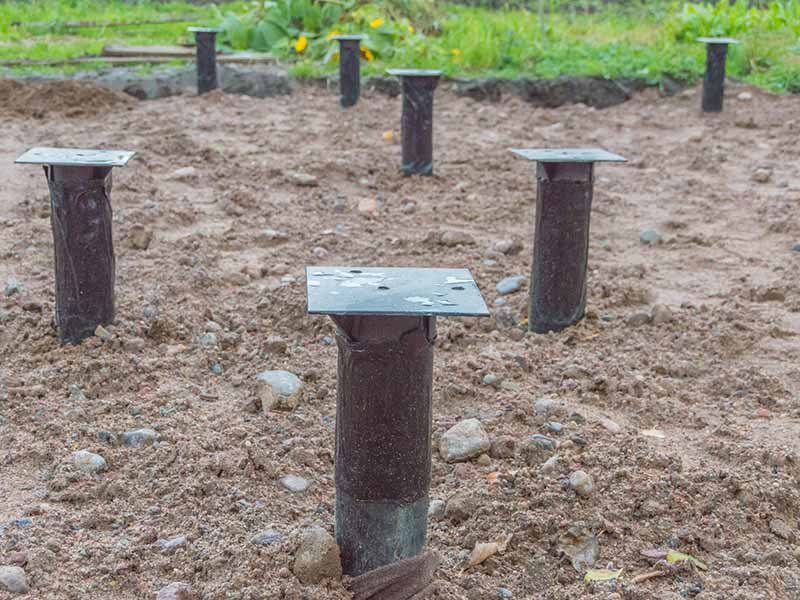
The Arkansas River has been moved, flooded and dammed in Pueblo, and the ground shows it. The 1921 flood, the largest in Pueblo's history, sent water as deep as 18 feet through downtown, after which the river was rerouted. Fill, old channels and changing groundwater all show up under today's industrial lots. We build deep foundations and piers for plants, mills and heavy buildings in Pueblo and the Arkansas Valley, selecting the system from the soil report rather than from habit.
Deep foundations carry building loads below weak or variable soils to firmer ground or rock. They go in when spread footings cannot carry the load, when settlement is a risk, when uplift from wind or equipment matters, or when the building needs a tight tolerance for cranes or processing lines. The choice among driven piles, drilled piers, helical piers and micropiles depends on soil, loads, access, noise limits and cost.
We write the options in plain terms: what each one is, what it costs per foot and per pier, how long it takes and what can go wrong. If a spread footing on improved soil is cheaper and safe, we say that too, because a deep foundation you did not need is the most expensive kind.
Reading the ground before choosing a system
We begin with the geotechnical report, and when there isn't one we help you order one. Borings that are too shallow or too few are the most common cause of foundation surprises. We read the logs, look at groundwater, fill, cobbles and bedrock depth, and talk through what the report does and does not show.
Site constraints matter as much as soil. A tight yard next to live equipment does not suit a big pile driver. A crane-ready building with overhead bridge cranes can't tolerate vibration that disturbs the process. A site near a creek or river flood zone needs temporary casing and dewatering. Each constraint pushes the system choice in a different direction. Overhead lines limit rig height, buried utilities limit where a pier can go, and a fenced yard limits where spoils can be stockpiled. We walk the site with the rig operator before we commit to a method, because the person who runs the machine knows what will not fit.
Rivers, dams and heavy plants in the metro
Water is a theme in Pueblo foundation work. Pueblo Dam, a buttress concrete dam 250 feet tall and 10,230 feet long, holds back the Arkansas River, and the Lake Pueblo area shows how big structures here get set on bedrock. In town, the Union Avenue district is a reminder of what the river did to buildings that sat low.
Industrial buildings along the river have the same exposure in a smaller way. The south-side steel works has sat on the Arkansas from its first production in 1881, and heavy plants there often need foundations that stay put under crane loads, rolling equipment and temperature swings.
Choosing among driven, drilled, helical and micro
Driven piles are fast and cost-effective in the right soil, but they make noise and vibration. Drilled piers carry large loads and give a clear record of what you hit, but they need equipment and spoils handling. Helical piers install quickly with little vibration and suit lighter loads and retrofits. Micropiles reach through obstructions into rock and work in tight spaces.
We compare these on a single sheet: capacity, installation time, access needs, quality control and cost. Details of the drilled option are in our drilled pier foundations page, and the pile caps, grade beams and the heavy equipment foundations that bear on them are part of the same package.
Load tests, inspection and permit reviews
Piers and piles are inspected as they are installed, not after. A special inspector watches depth, torque, drilling logs or driving records, and the engineer reviews them. Load tests on a sample pile confirm capacity and can reduce the number of piles. We keep a log for every pier showing location, elevation, depth, material encountered and concrete volume, and we hand that record to the owner at turnover, which becomes the paper trail for the next expansion. We schedule the load test early because its results drive the rest of the foundation.
Foundation permits follow the building permit. The Pueblo Regional Building Department lists the 2021 IBC among the codes currently in effect, and the County Building Division enforces 2021 International Code Council codes with local amendments. We confirm the jurisdiction and the review path at the start, so the foundation package is complete when it goes in.
What pushes deep foundation cost
Pier count, depth, diameter and the soil all drive the price, along with mobilization and access. A short run of deep pier work can be expensive per pier because the rig has to come to the site. A large job spreads that cost over many piers. Groundwater and caving soils add casing, dewatering or slurry. Rock adds coring or special tooling. Pier spacing and cap design change the concrete and steel quantities even when the pier count stays the same, so we look for a layout that uses fewer, larger piers where the structure allows it.
We price deep foundations with a unit rate per pier or per foot plus separate lines for load tests, caps, grade beams and mobilization. Owners planning tilt-wall buildings or heavy process buildings should ask for deep foundation allowances at concept stage, and for utilities and power projects we compare options for uplift and lateral loads.
Bring us the boring logs.
Send the geotechnical report and the structural loads. We will recommend a foundation system, give you a price per pier and lay out the schedule.
Questions and Answers
When do I need deep foundations instead of spread footings?
When the soils near the surface cannot carry the building load without too much settlement, when uplift or lateral loads are large, or when equipment needs a very stable base. The geotechnical engineer makes the recommendation, and we price both options so you can compare.
How long does pier installation take?
A drilled pier crew can usually complete several piers per day in good soil, and helical piers can go faster. Weather, groundwater and rock change that. We give a day count after we see the boring logs and the pier schedule.
Can you install piers inside an existing building?
Yes, with low-headroom rigs, helical piers or micropiles. Access, clearance and vibration are the limits. We plan around overhead cranes, process lines and floor load limits.
What does a load test cost and is it worth it?
A pile or pier load test is a significant line item, but it can reduce the number of foundations or confirm that the design is safe. On large buildings, testing often pays for itself.
What if we hit rock or obstructions?
We plan for that with a contingency rate for rock drilling or obstruction removal. The unit price should show what is included and what is extra, so you aren't surprised by a change order.
Related
Ready to talk about your project?
Tell us about the site, the heaviest loads and the date that matters. We will review the scope and follow up with next steps for your Pueblo project.