
Industries
Food and Beverage Plant Construction in Pueblo, Colorado
The Quaker Flour Mill is one of 69 contributing properties in the Union Avenue Historic Commercial District, which covers 27 acres of downtown Pueblo and holds many buildings from the 1880s. A flour mill is a good reminder that food processing in this valley is old, and that old buildings, new food safety rules and modern equipment now have to share the same few acres. Out east the picture is farms: Rocky Ford is known for watermelons and cantaloupes, and growers there depend on packing, washing and cooling space within reach.
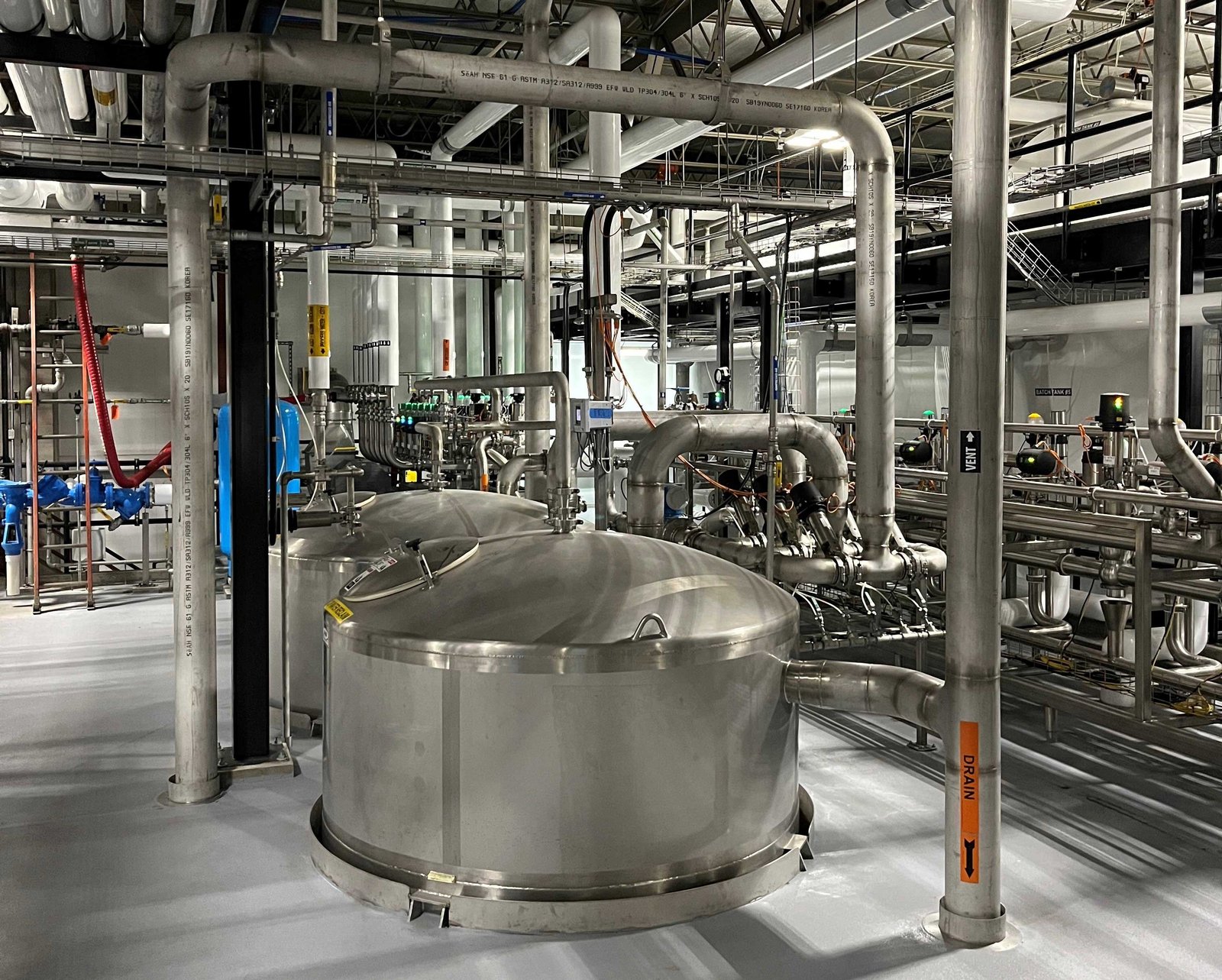
Processors, packers and beverage makers come to us with a plain set of problems. A floor that can be washed down every night without failing. Drains that carry the load and can be cleaned. Walls and ceilings that do not collect water or dust. A layout that keeps raw product apart from finished product. And a schedule tied to harvest or a seasonal launch that does not move.
We build new plants, additions and renovations for food and beverage owners, and we work with the process equipment suppliers and the owner's quality group from the start.
Washdown floors, drains and what fails first
The floor is where a food plant gets into trouble. A poorly sloped slab holds water, a bad joint harbors bacteria, and a coating that debonds forces a shutdown. We design the slab with slopes to drains, place the drains where the process puts water, and apply sealed or resinous finishes approved for the chemicals and temperatures in the room. These are special applications of industrial concrete floors, and the details matter more than the thickness.
Drain capacity has to match the washdown volume, and it has to connect to a wastewater system that can handle the load. Many processors need pretreatment before discharge, which means tanks, screens and sometimes a dedicated building. We lay out the plant's waste stream with the owner's engineer before we pour, because moving a trench after the slab is cast means cutting concrete.
Produce, flour and water along the Arkansas
The Arkansas Valley's food base starts with agriculture. Rocky Ford is an agricultural town, and the BNSF line through La Junta carries freight in and out of the valley. Water is part of the picture too. The Arkansas Valley Conduit, a 230 mile pipeline from Pueblo Reservoir to Lamar and Eads serving communities, broke ground at Pueblo Dam in October 2020, and water supply to those communities matters to anyone planning a processing plant east of Pueblo.
Downtown Pueblo has a lesson for site selection. The 1921 flood, the largest in the city's history, put as much as 18 feet of water through downtown and devastated the Union Avenue district before the river was rerouted. We check flood exposure and drainage on any site, whether in town or out on the river bottom, and we design food plants so critical rooms sit above known risk.
New plants, additions and conversions
Scope runs from a packing shed with a cooler to a multi-line processing plant. We build the shell, the process floors, the cold rooms, the dock and the utility yard, and we coordinate the refrigeration contractor, whose work overlaps with cold storage construction. Insulated panels with smooth, cleanable surfaces are common, along with stainless trim, sealed penetrations and hygienic door types.
Renovations are as common as new plants. Older food buildings need floors replaced, drains rebuilt, and rooms reorganized, often while production continues. Our industrial renovations and modernization work is planned around cleaning cycles and food safety rules, with dust and water controlled and temporary walls that actually seal.
Codes, reviews and the energy rules
The Pueblo Regional Building Department lists the 2021 I-codes and the 2023 National Electrical Code as in effect, and the city reports that commercial approvals take about 75 days. Food plants add reviews from health and environmental agencies, and some processes need air or wastewater permits. We list every approval on the schedule at the start, with the person responsible, so nothing waits until the week before a pour.
Colorado's HB22-1362 requires any county or municipality that updates a building code on or after July 1, 2023 to adopt an energy code at least as strict as the 2021 IECC. Food plants use a lot of energy for refrigeration, hot water and ventilation. Insulation, heat recovery and efficient doors are design choices we price as options so the owner sees capital and operating cost together.
Building to a harvest or launch date
Food and beverage schedules are often fixed by nature or the calendar. A packing line that must run when the crop comes in cannot be late, and a beverage product launch has retail dates attached. We schedule backward from the first day of production and build in time for equipment installation, sanitation, trial runs and any inspections.
Long-lead equipment drives the dates: refrigeration compressors, process lines, boilers and panels. Early procurement through long-lead procurement management secures them before the building is ready. A plant that sits waiting for its equipment is expensive, and so is equipment that arrives before there is a place to put it.
Related owners and neighbors
Food plants depend on the cold chain and on freight. Read about our cold storage and refrigerated work for coolers and freezers, and about logistics and distribution for dry warehouses and truck courts. Both overlap with the dock, the apron and the yard around a food plant.
If you are comparing building types, the food and beverage processing page covers the typical layouts. And if your building is downtown, in or near the Union Avenue district, we will discuss the historic and flood questions before design starts.
Tell us the product and the first production date
Send the process flow, the sanitation rules and the date the first product has to ship. We will price the floors, drains, shell and cold rooms and show where the schedule is exposed.
Questions and Answers
What floor finish should a food plant use?
It depends on the room: wet processing, dry packing and cold rooms each need a different system. Resinous coatings, urethane cement and sealed concrete are the main choices. We look at temperatures, chemicals and wash methods with the owner and the flooring manufacturer. Slope to drains and joint detail are as important as the coating.
Can you build near the Arkansas River?
Yes, with attention to flood risk and groundwater. The 1921 flood put water 18 feet deep in downtown Pueblo, so we check flood exposure and grade critical rooms accordingly. Stormwater and wastewater handling are designed early for riverside sites.
How do you handle an addition to a working plant?
We isolate the construction with sealed barriers, control dust and water, and schedule noisy or disruptive work around production and cleaning cycles. The owner's quality group reviews the plan before we start. Tie-ins to utilities and process lines are planned for planned shutdowns.
Do you build packing sheds for produce?
Yes. Packing sheds need good truck access, washable floors, drains, cooling and room for pallets. We build them as pre-engineered metal buildings or other shells depending on size, and we add refrigerated rooms as needed. Sheds near the growing areas should be sited with utilities and three-phase power in mind.
What approvals does a food plant need beyond building permits?
Depending on the product, health department, environmental and wastewater approvals. Pueblo reports about 75 days for commercial building approvals. We list every agency on the schedule from the start and help the owner prepare documents.
Related
Ready to talk about your project?
Tell us about the site, the heaviest loads and the date that matters. We will review the scope and follow up with next steps for your Pueblo project.