
Industrial Construction Services
Site Clearing and Mass Grading for Pueblo Plants
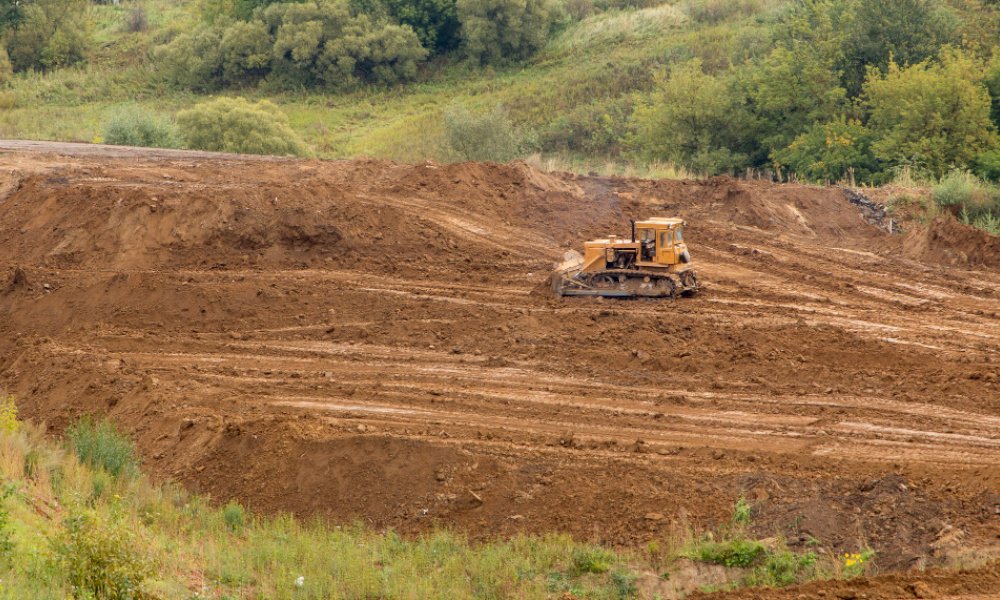
Every plant starts as a cut-and-fill problem. Before a footing is dug, someone has to decide how many thousand yards move, where the surplus goes, how the finished surface sheds water and whether the haul road can carry a loaded steel truck in March. We schedule that work with scrapers, dozers, graders and compaction equipment sized for the site, and we keep the survey crew on the ground with them.
Mass grading is the one place where a small mistake costs the most. A building pad that is four inches low in one corner ends up with a thicker slab, a drain that won't drain or a dock that sits wrong to its apron. We set control early, stake in a grid and check elevations as we place each lift, so the numbers in the plan match the ground.
We work for owners who want a ready pad: cleared, stripped, benched, filled in compacted lifts and graded to the plan with the drainage falls already in place. We also work for owners who need to stage a parcel in phases, grading the whole site now and building across several years.
What clearing and grading includes
The sequence runs from the perimeter in. We install erosion and sediment controls first, then clear vegetation, strip topsoil and stockpile what will be reused. Unsuitable material is removed, proofrolled subgrade is checked, and structural fill goes in under engineered lifts and moisture control. The result is a surface ready for storm water and detention, utilities and foundations.
Cut and fill are balanced where possible. Moving soil costs money, and hauling it offsite costs more, so we plan the earthwork to keep material on the parcel and to place it where it will do structural work. Where the site must import material, we test it and track every load.
What the ground looks like in this valley
Pueblo West sits at 5,033 feet and covers about 49 square miles as an unincorporated community governed by Pueblo County, with a North Industrial Park and a US 50 corridor that links it to I-25. It is described as a growing industrial center. Sites there and elsewhere across the valley are large, open and exposed to wind, so dust control and moisture management matter from the first pass.
The scale of land under redevelopment is unusual. Master plan work at PuebloPlex covers a roughly 16,000 acre site with more than 600 buildings plus utility and transportation systems, and the city lists 40 acres at Pueblo Memorial Airport with direct taxiway access. Parcels that big let an owner choose the best ground, and we help evaluate which part of the property makes the best pad.
Control, compaction and testing
We start every job with a surveyed grid and a written earthwork plan that shows cut and fill volumes, stockpile locations, haul routes and the compaction method for each material. A third-party testing firm checks density and moisture, and we do not cover a lift until it passes. Failed tests are reworked before the next layer goes on.
Haul routes receive their own attention. If heavy trucks will cross the site for months, we build heavy haul access roads and a stabilized laydown yard first, so deliveries and erection equipment do not tear up the finished pad.
Dust, water and the people nearby
Open ground in a windy valley means dust. We run water trucks, limit exposed area and stage work to keep disturbance small, and we add stabilization to areas that will sit idle. Erosion control is installed before disturbance and inspected after storms, since a sudden rain on bare soil can send sediment into a channel quickly.
Equipment safety matters too. Scrapers and haul trucks share the site with survey crews and inspectors, so we use spotters, backup alarms, marked routes and daily briefings. Public roads get clean-out and tracking control at the gate.
What moves the earthwork price
The largest swing is haul distance and quantity, followed by soil quality and weather. Rock, wet ground or old fill raises the cost. A site that needs import has a very different price from one that balances. We state our quantities and unit prices in writing so changes can be priced from the same basis.
Highway access can change the haul equation too. Along the northern loop of State Highway 47, the freeway section crosses Fountain Creek, and parcels near creeks and floodplains may need special grading or setbacks. Owners looking at flex and light industrial space near these corridors should talk with us before settling on a pad elevation.
Decisions to make before we move dirt
Pick the finished floor elevation with drainage in mind and make sure the pad is high enough to shed water away from the building. Decide whether the rail spur, if any, will be graded now, and plan the truck routes so they do not cross the rail at a bad angle. Our work on rail spur site improvements often begins with this earthwork.
Think about the future. If you may expand, grade the adjacent area now and leave it stabilized. Finally, confirm who is responsible for what in the logistics and distribution yard, since the grades for trailers differ from those for a plant floor, and a flat spot in the wrong place makes a dock unusable.
Walk the parcel with us
Send the survey and the geotechnical report if you have them. We will walk the ground, mark what has to come out and give you an earthwork number with the assumptions written down.
Questions and Answers
How long does mass grading take?
On an average industrial parcel, grading takes weeks, not months, but the number depends on quantities, weather and the sequence of tests. We schedule it so the pad is ready when the foundation crew arrives and we avoid leaving bare ground exposed long before building starts.
Do you handle erosion and stormwater permits?
We install and maintain the controls that the permit requires and coordinate with the design engineer and the reviewing office. The permit itself is an owner or design-team item unless we agree otherwise in the contract, and we help gather the information needed to obtain it.
What if the borings show poor soil?
We discuss options with the geotechnical engineer: over-excavation and replacement, soil improvement, geogrid or deeper foundations. Each has its own cost and effect on the schedule. We price them side by side so you can pick the one that fits the building.
Can you grade a large site in phases?
Yes. Phasing lets you spend capital as you grow. We grade and stabilize each phase, leave the next phase protected and keep the haul roads usable. The key is to plan drainage for the whole site, so each phase does not undo the last.
How do you control dust in a dry, windy valley?
With water trucks, limited exposed area, stabilized haul roads and quick seeding or surface treatment on idle areas. We also pause the most dust-producing work when wind is high, because complaints from neighbors cost more than a half day of delay.
Related
Ready to talk about your project?
Tell us about the site, the heaviest loads and the date that matters. We will review the scope and follow up with next steps for your Pueblo project.