
Industrial Construction Services
Maintenance Shops and Service Bays in Pueblo, Colorado
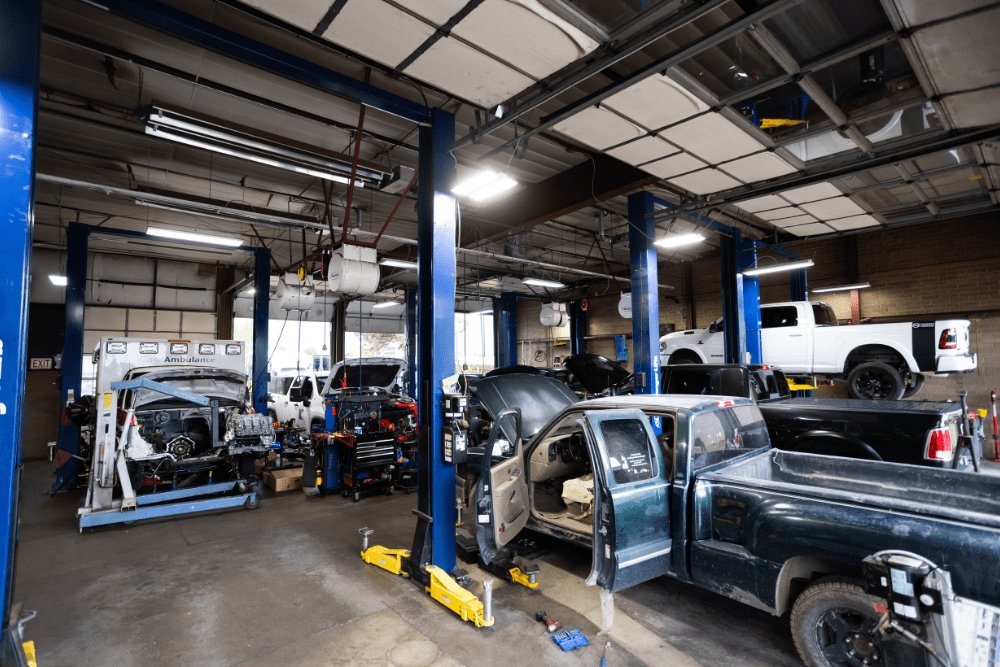
Heavy equipment breaks on its own schedule, and the shop that fixes it either has the room to do the job or it does not. A mill roll, a rail car truck, a mobile crane boom, a pump skid and a loader transmission all need a floor that carries them, a hoist that lifts them, light to see by and enough clear floor to lay parts out in order. Too many maintenance shops are a corner of the main building with a workbench and a borrowed forklift.
We build dedicated maintenance shops and service bays for plants, rail operators, contractors and equipment dealers. The scope is usually a single-story industrial building with tall drive-through doors, an overhead crane or monorail, heavy slabs with trenches and pits, wash areas, parts storage, a tool crib and a small office. The details are what separate a shop that works from one that frustrates: where the compressed air drops are, whether the welding bay has ventilation, whether the door swing clears the longest piece.
Around Pueblo, plenty of shops serve heavy industry. EVRAZ Rocky Mountain Steel reports 931 employees and runs electric-furnace steel, rail, rod, bar and seamless tube mills. PuebloPlex lists rail car storage and maintenance among its tenant activities, and the Transportation Technology Center runs about 48 miles of track northeast of town. The maintenance buildings behind those operations are what we know how to build.
Designing around the heaviest repair
We start with the biggest and heaviest thing the shop will touch. Its length sets the bay, its weight sets the slab and crane, and its shape decides the door. We ask the maintenance foreman to walk us through a bad day, the repair that ties up two bays and every tool in the building, and we design for that day rather than the average one.
Flow comes second. Parts arrive at a receiving door, go to a wash or blast area, move to the repair bay, then to test and out. A good shop has a path where a part never crosses another job. Clear aisles for forklifts, laydown space near each bay and storage close to the work save more hours than any tool. We draw this out with the crew, mark it on the slab with tape and walk through it before final plans are drawn.
What is in a maintenance building
The structure is typically steel framing, a tall eave and a roof designed to carry crane loads. Where overhead lifting is part of the job, runway beams, crane columns and foundations are sized to the rated capacity and checked against our high-bay crane-ready building methods. Smaller shops may use monorails or jib cranes, which are simpler to install. Many owners choose a pre-engineered metal building shell because it costs less and builds fast, with the crane steel detailed from the start.
Inside, the slab is thick and reinforced, with trench drains, sumps, tie-down points for fixtures and, if needed, a pit. Utilities include high-capacity electrical service, welding receptacles, compressed air, lighting, exhaust capture and sometimes process water or steam. A wash bay with oil separation, a paint or blast area with ventilation and filtration, and a parts room with racks round out the building.
Hot work, lifts and lockout
The shop floor is the most dangerous room in a plant. We design for it: welding bays with screening and exhaust, flammable storage away from ignition sources, eyewash and shower stations near chemical use, and clear emergency egress. Crane operation needs defined lift zones, load limits posted on the structure and a place for operators to stand clear.
During construction in or beside an active plant, we follow the owner's permits for hot work, lockout and tagout and confined space entry. We also set up traffic control for forklifts and trucks. When the new shop ties into existing utilities, tie-ins are planned with the maintenance supervisor and done during shutdown windows.
Choices that cost more to change later
Clear height and crane capacity come first, since they determine frame size and foundations. If there is any chance the shop will handle larger pieces in future, build the runway for a heavier crane now. Door size follows, since a door that is too short or narrow cannot be fixed cheaply. Floor drainage and slope should be planned for washdown, and slab thickness should assume the heaviest jack and stand loads.
Location on the site matters. A shop near the process it serves saves travel, but one near the edge of the plant has easier truck access and fewer conflicts with production. In an older plant, buried utilities and old foundations complicate siting, so we investigate before locking in the footprint. Locating the building near existing mill-area infrastructure can also reduce utility extensions.
Where this ties in
Maintenance shops pair with yards, pads and utilities: foundations for equipment, aprons for vehicle access, and electric service upgrades. Fleet operators should also read about our automotive and fleet facilities, which cover vehicle-focused yards and fueling. For plants in metals and heavy industry, the shop is a key part of keeping lines running, and the structure often links with larger renovation or expansion projects.
A shop at PuebloPlex or along a rail spur can include track access so cars or engines can roll in. We coordinate track layout with the rail owner and the shop design, a service that overlaps with our rail spur site improvements.
Build the shop around the worst repair day
Bring us a list of the equipment you repair, the heaviest piece and the footprint you have. We will draw the building around the work and give a price. Larger additions may fit under industrial renovations.
Questions and Answers
How strong should the slab be?
Strong enough for the heaviest axle, jack stand or outrigger load you will see, plus impact. We ask for equipment weights and design thickness, reinforcement and subgrade preparation accordingly. A shop slab that cracks under a lift is a daily irritation.
Do we need a crane?
If you lift engines, motors, wheelsets or other heavy components more than a few times a week, an overhead crane or monorail pays back quickly. We help you compare options, including a jib crane or portable gantry for lighter work.
Can you build a shop with rail access?
Yes. We coordinate track layout and clearances with the railroad and design the building with doors, pits and slab that suit the equipment. Track work itself is performed under the railroad's standards.
How long does a maintenance shop take?
After permits, a straightforward shop can be erected in a few months. Cranes, large doors and ventilation systems have lead times that can set the date, so we order them early.
What do you do about oil and wash water?
We design floor drains, sumps and oil/water separators according to the local authority. Wash water usually cannot go to the storm system, and we confirm the discharge path before pouring the slab.
Related
Ready to talk about your project?
Tell us about the site, the heaviest loads and the date that matters. We will review the scope and follow up with next steps for your Pueblo project.